Trauma therapy sits at the intersection of psychology, medicine, and the body’s survival systems. People seek it after car accidents, medical crises, childhood abuse, war, neglect, a violent breakup, or a string of smaller events that never felt small inside their nervous system. Over years in practice, I have watched clients arrive with the same handful of worries: that therapy will make things worse, that they will have to retell every detail, that only one method works, that if they were stronger they would not need help. The truth is kinder and more practical than those myths, and it starts with understanding how trauma shows up and how treatment actually works.
What trauma means in a clinical room, not just in headlines
Trauma is not only the event, it is what your nervous system had to do to keep you safe at the time and what it continues to do when it does not realize danger has passed. Flashbacks, a hair-trigger startle, numbness, migraines triggered by smells, sleep that feels like wrestling, a quiet dread in crowds, rage that appears out of nowhere, losing words when a conversation turns tense, shutting down during sex, or feeling detached from your body during meetings, these are all common. Many people carry guilt over not remembering their trauma in a tidy timeline. Memory under threat is not a courtroom transcript. The brain stores traumatic memory in fragments tied to sensations, images, or body states, and that is https://penzu.com/p/89f5564161d0f24e one reason approaches like Somatic therapy and Movement therapy matter. They help the body tell its part of the story.
A quick scan of persistent myths
- If I start trauma therapy, I will have to relive everything in detail. Only one type of trauma therapy really works. Therapy takes years, and I will get worse before I get better. Trauma is purely a mind issue, so body-based work is optional fluff. If my trauma is old, it is too late to change.
Each of these shows up weekly in intake calls. Each contains a sliver of truth that has been twisted by fear or by poor therapy experiences. The facts are more nuanced, and more hopeful.
Myth: Trauma therapy means telling your story from start to finish
Fact: You do not have to give a play-by-play of your worst moments for treatment to work. That idea grows out of older or misapplied exposure techniques, and it ignores how memory functions under threat. In well-delivered trauma therapy, the story serves your nervous system, not the other way around. A session often starts with present symptoms and goals: sleeping through the night, driving over the bridge without panicking, feeling less angry with your partner, staying inside your body during routine stress. The therapist and client build a working map of triggers, resources, and strengths.
In practice, this might mean spending a session on how your chest locks up in staff meetings and what happens in your legs when the manager raises his voice. We are tracking how your system protects you. Later, when you touch traumatic material, you do so in tolerable doses. Somatic therapy, sensorimotor psychotherapy, EMDR, and paced cognitive processing all allow processing without full narrative. Your system gets to renegotiate danger with support on board, not in a free fall.
I worked with a client in her 30s who had near blackouts whenever a door slammed. She could not remember much of her childhood, and the blankness frightened her. We started with her present startle response. She learned to feel her feet on the floor and to orient her eyes to the room when a sound shocked her. After a few weeks, the slamming no longer pulled her entirely out of the moment. Only then did we move to short pieces of memory. She never gave a tidy autobiography, yet her symptoms eased and her sense of choice returned.
Myth: You must pick the one correct method and stick to it
Fact: No single modality owns the truth. The research base strongly supports a handful of approaches for posttraumatic stress symptoms, including versions of exposure therapy, cognitive processing therapy, and EMDR. At the same time, Somatic therapy has grown an evidence base over the last decade, especially for chronic dysregulation, dissociation, and trauma that began early in life. Attachment therapy principles help clients whose injuries happened inside relationships, not outside them. Grief counseling matters when the central wound is loss, not fear. Movement therapy can be crucial for people whose bodies carry the brunt of their symptoms or who cannot access words under stress.
Real therapy pulls from several of these, sometimes in the same session. For example, a veteran working through a convoy ambush might do structured exposure to sounds while also practicing grounding that involves breath and grip strength, then later work on the belief that he failed his team. A client healing from an abusive caregiver may need attachment-focused sessions to build safe connection with the therapist, along with body-based work that teaches her to notice early signals of shutdown and mobilization. When grief is primary, the work may look different from fear processing, and it often includes rituals, meaning-making, and gentle confrontation of avoidant patterns that keep sorrow frozen.

The art is in sequencing. If panic spikes the moment you try to visualize a memory, we start with stabilization and gentle titration. If you are stuck in grief, focusing only on anxiety skills can feel sterile. Experienced clinicians move among methods, not out of indecision but out of respect for the nervous system’s pacing.
Myth: It will take years, and I have to get worse before I get better
Fact: Time frames vary, and getting worse is not a requirement. Some people get broad relief in a dozen to two dozen sessions, especially for single-incident trauma where life otherwise feels stable. Others, particularly those with complex or developmental trauma, work in waves over months or years, with clear goals for each phase. The critical measure is not calendar time but the arc of function and dignity. Do you sleep more, avoid fewer places, trust more people, react less violently inside to daily stress, have steadier access to calm or play?
The idea that symptoms must spike before improvement often comes from poor preparation or all-gas-no-brake processing. Processing can stir feelings, of course, but any spike should be temporary and followed by the felt sense that something has shifted or loosened. If you leave sessions more rattled than resourced, repeatedly, that is a treatment problem, not a character flaw. Good trauma therapy respects a principle called titration: touch the hot material in small amounts, return to safety, and build capacity to feel without being flooded.
I once consulted on a case where a young man, after a single harrowing session of unstructured retelling, quit therapy and would not return for two years. When he finally found someone who slowed down, used present-moment signals to pace the work, and anchored him to the room with sensory cues, he processed the same memory across three shorter sessions and slept through the night for the first time in months. He did not need to suffer more to heal. He needed a more intelligent plan.
Myth: The body is peripheral. Talk it out and move on
Fact: Trauma is a body event, even when the story happened in your mind. Your heart rate, breathing patterns, muscle tone, gut motility, pain thresholds, and balance systems all adjust during and after threat. Ignoring these shifts leaves a lot of leverage on the table. Somatic therapy and Movement therapy do not replace talk therapy, they add the missing channels. Small, precise movements and sensation tracking can unlock change faster than hours of analysis, especially when words evaporate under stress.
A practical example: a client who goes numb during arguments may learn to notice the moment her shoulders creep toward her ears, then deliberately lower them and push her feet into the floor. That is not a superficial hack. It signals the nervous system that it can mobilize without collapsing, and it buys seconds of choice. Another client with explosive anger might practice slowing exhale length by two counts while squeezing a stress ball, then immediately name three objects in the room. Breath, grip, and orienting work together to pull him out of tunnel vision. These are somatic micro-skills, and when rehearsed, they alter the landscape for deeper processing.
Movement therapy can complement this by reintroducing safe activation to bodies that learned stillness as a survival skill. A gentle set of lunges while tracking sensation, a supported yoga pose that emphasizes interoception rather than performance, or a short, rhythmic walk while narrating what feels safe and what does not, all teach the system that movement does not equal danger. People often report that after weeks of this, their range of emotion widens, not in chaos but in richness.
Myth: Attachment therapy is only for childhood issues
Fact: Attachment is the template we use to navigate closeness now, not just back then. Traumatic events that occur in adult relationships, such as betrayal, assault, or domestic violence, still land on an attachment map. Therapy that attends to this can prevent a common trap: solving symptoms while ignoring the relational injuries that keep them fueled.
In practice, attachment-informed work looks like naming the cycle that happens between you and your partner when a trigger hits, building experiments that increase safety in tiny steps, and using the therapist-client relationship as a laboratory for trying new ways of asking for help or setting limits. A client might realize that every time she feels scared, she tests the other person by withdrawing. Therapy helps her notice the moment of withdrawal, practice saying one sentence of fear instead, and track what happens in her body when she stays in contact for five more seconds than usual. These increments change everything over time.
Myth: Grief counseling is separate from trauma therapy
Fact: Grief and trauma often travel together, and separating them too strictly can stall progress. If your father died after a long illness, you may have both terror from the medical trauma and sorrow from the loss of the man himself. If you survived a crash where a friend did not, grief work is not optional. Grief counseling gives space to honor what is gone, wrestle with meaning, and build rituals of remembrance, while trauma therapy quiets the alarms that keep jolting you out of sleep. Clients sometimes make the most progress when these streams run side by side. Some sessions will look like bearing witness and letting tears move through without rescue. Others will look like desensitizing a smell that snaps you back to the ICU.
I think of a nurse who worked in a trauma bay during a surge year. Sirens put her on edge. She also cried every time she smelled antiseptic at home. Separating grief from trauma in her plan kept us honest. We did structured exposure for sounds and bodily resource building for panic. We also created a small ritual before night shifts that named specific losses. Her panic dropped, and her guilt softened. Both streams mattered.
What early sessions actually look like
People imagine trauma therapy as an immediate plunge into memory. Early work is usually steadier. A first meeting often sets safety parameters: how to pause, what signals therapist and client will use if the session gets too hot, and which supports exist between sessions. We map triggers and resources. Sleep and substances get honest attention, not to scold but to understand how your system is coping.
Within two to four sessions, most clients learn at least three regulate-in-the-moment skills tailored to their physiology. Somatic check-ins often start with simple questions: Where in your body feels neutral or slightly pleasant right now, even two percent? Can you track the shape of your breath without changing it? What happens in your jaw when you talk about that meeting? Tiny awareness shifts are the secret engine of change.
From there, the work branches. If you have a single-incident trauma and stable life supports, you might choose a protocol that runs for eight to sixteen sessions and measures progress at set intervals. If your trauma history is layered and relational, we build a longer arc: stabilization, then processing in short pieces, then integration into daily life. All along, we protect what is already working. Therapy should never remove coping faster than it replaces it with something sturdier.
How Somatic therapy, Movement therapy, and traditional methods fit together
It helps to picture three tracks that constantly inform one another.
Track one is physiological regulation. Breath work, grounding, orientation, posture, and micro-movements. Somatic therapy and Movement therapy live here. Practice on this track reduces reactivity, increases your sense of choice, and prepares your nervous system to process.
Track two is processing threat memory and meaning. Here is where structured methods like EMDR, prolonged exposure, and cognitive processing live, along with narrative work when useful. The goal is not to delete memory but to file it in the past, unlink it from unmanageable alarm responses, and revise harmful beliefs that grew in the aftermath.
Track three is relational and identity repair. Attachment therapy and parts-informed work sit here. You learn to ask for help without collapsing or lashing out, to set limits in ways that your body can tolerate, and to update your identity from survivor to whole person with history.
Clients do not walk one track to the end and then start the next. A session might open with physical regulation, move into five minutes of processing a specific image or sensation, and close with practicing a boundary script for a family dinner. Change accrues in layers.
What about medication, self-help, and timing
Medication can be a useful brace, especially for sleep and overwhelming anxiety or depression. It is not a betrayal of inner strength. The difference between four hours of fragmented sleep and seven hours of more continuous sleep is often the difference between meltdown and progress. Work with a prescriber who respects trauma therapy and aims for the lowest effective dosages. As therapy progresses, many clients reduce or discontinue medication under medical supervision. Others continue a small dose because it supports their long-term function. Both paths are valid.
Self-help practices can help, within limits. Mindfulness, gentle exercise, community support, and creative outlets matter. The mistake is expecting these alone to unwind traumatic memory networks that were formed under threat. When symptoms are entrenched or when triggers hijack your day, structured trauma therapy speeds change and reduces suffering.
Timing matters. Starting too soon after an event can overwhelm a person who is still in acute danger or fresh shock. On the other hand, waiting for the perfect season of life can turn into years. If you are safe now and symptoms persist beyond a few weeks, or if they disrupt work, parenting, driving, or sleep, that is a fair time to start. If an anniversary is approaching, you can still begin. A skilled therapist will plan for those dates.
When therapy risks retraumatization, and how good clinicians prevent it
Retraumatization happens when therapy replicates the helplessness, lack of control, or disregard that defined the original injury. It is not the same as feeling difficult emotions. Prevention starts with informed consent and choice at every step. Clients should set the pace, approve methods, and have permission to pause. Therapists watch posture, breath, and micro-movements for signs of overload. They teach skills before deep dives. They prepare for homework or transitional moments like getting into a car after a hard session. In couples or family contexts, they build confidentiality agreements that prevent weaponization of disclosures.

If you have been hurt by therapy before, say so at intake. Ask the new clinician what they do to prevent overwhelm. A thoughtful answer will reference pacing, consent, body cues, and specific grounding strategies, not just reassurance.
Choosing a therapist who fits your nervous system
Credentials matter, but chemistry and method fit matter more. Trauma is an injury that touches safety, trust, and choice. If you do not feel those in the room, skills cannot compensate forever.
Consider a short checklist when you interview potential clinicians:
- Do they explain their approach in plain language and invite your questions? Can they name more than one method and describe how they decide which to use? Do they ask about your body cues, not just your thoughts? Do they plan specific safety measures for when sessions get intense? Are they open to including partners or family when appropriate, or to collaborating with a prescriber?
Trust the signals your body sends during the call. A slight ease in your breath or shoulders is a data point. A knot in your stomach is another. Therapy should feel like a joint venture, not a lecture.
Signs progress is happening, even if symptoms have not vanished
Hope grows with evidence. Early in therapy, these small wins often show up before the big ones:
You start catching the moment a trigger begins rather than waking up in the middle of a reaction. You notice your feet when a loud sound hits. You feel two percent more sadness and five percent less fear when you talk about your loss. You can name one need in a tense conversation. You sleep an extra thirty minutes a few nights a week. Your world expands by a coffee shop, a bridge, a stretch of highway. These are not trivial. They are the scaffolding for bigger shifts.
Data helps. Some clients track symptoms weekly with a brief scale. Others keep a simple log of sleep, panic intensity, or avoidance. Over eight to twelve weeks, patterns emerge. A good therapist will help you read those patterns and adjust the plan.
Edge cases and trade-offs that deserve honesty
- Chronic pain can complicate trauma therapy, because pain is both a symptom of dysregulated systems and a source of threat signals itself. Body-based work must respect limits and often includes coordination with medical providers. Pushing through pain is a poor strategy. Slow pacing, micro-movements, and consent become essential. Substance use can be both coping and accelerator of symptoms. Stopping suddenly without replacement skills may spike anxiety and insomnia. For some, a harm reduction approach stabilizes life enough to make trauma work possible. For others, a short detox and medical support up front is safer. Couples therapy around trauma can help when partners want to become a team against triggers. It can also derail when it turns into cross-examination. Setting rules of engagement, like speaking for oneself and avoiding graphic content in joint sessions, preserves safety. Cultural and spiritual frames matter. Rituals, community, and meaning-making can be central to recovery, especially for grief arising from communal trauma. A clinician who listens for this and collaborates with your traditions increases the odds of deep change.
What it looks like to finish, or to pause well
Not every case ends with a perfect bow. Some clients complete a phase, then return in a year when a new layer emerges. That is not failure. Trauma therapy aims to restore choice and capacity. A good ending often includes a review of skills that now feel natural, a map of remaining hot spots, and a clear plan for what to do if symptoms spike. Clients often keep one or two short practices in their routine, like a two-minute orienting exercise in the morning or a once-a-week check-in with themselves about triggers and needs.
I remember a client who came terrified of car travel after a highway pileup. Four months later, she drove to visit her sister three hours away, with two planned rest stops. She kept one somatic tool and one cognitive tool as permanent habits. She still avoided driving in sleet, a boundary that felt wise rather than fear-based. Therapy gave her back the steering wheel, literally and figuratively.
The bottom line on myths and facts
Trauma therapy is not a single script. It is a set of principled ways to help a nervous system complete what it could not complete during threat and to reclaim a life worth living. Myths flourish where knowledge is thin or where bad experiences left scars. The facts, grounded in clinical practice and research, offer steadier ground:
You do not need to retell everything. Multiple methods work, especially in the right sequence. Length varies with history and goals, but suffering more is not required for healing. The body is central, not optional. Attachment patterns shape present safety. Grief often sits at the table with trauma, and respecting both speeds change.
If you recognize yourself in these lines, take that as a sign that your system is ready for support. Find someone skilled who listens to your words and your body, and who respects your pace. You carry the seeds of resilience already. Good therapy gives them the conditions to grow.
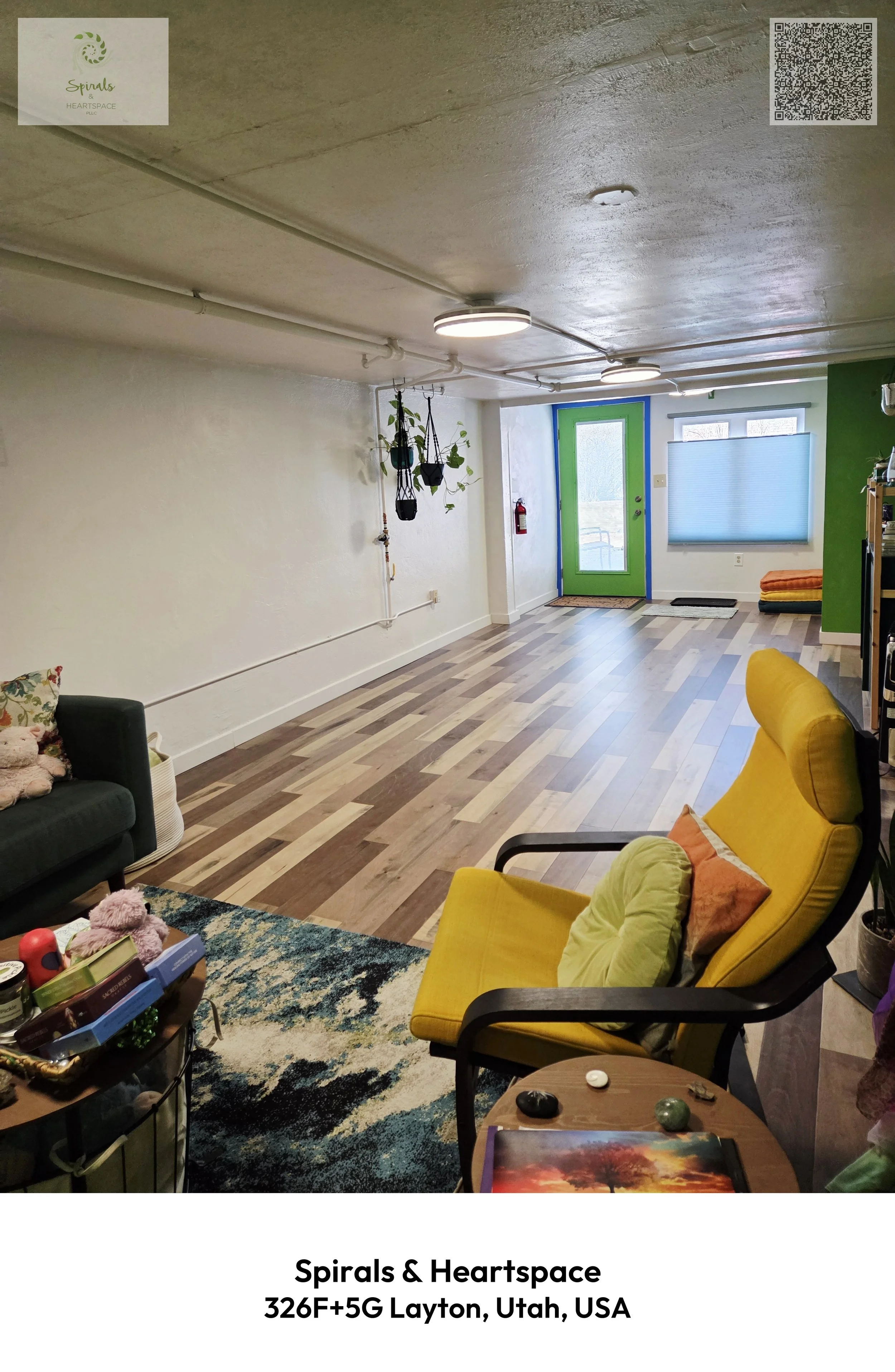
Spirals & Heartspace
Name: Spirals & HeartspaceAddress: 534 W Gentile St, Layton, UT 84041
Phone: (385) 301-5252
Website: https://spiralsandheartspacehealing.com/
Hours:
Sunday: Closed
Monday: 9:30 AM – 7:00 PM
Tuesday: 9:30 AM – 7:00 PM
Wednesday: 9:30 AM – 7:00 PM
Thursday: 9:30 AM – 7:00 PM
Friday: 9:30 AM – 7:00 PM
Saturday: Closed
Open-location code / plus code: 326F+5G Layton, Utah, USA
Coordinates: 41.0604503, -111.9762128
Map/listing URL: https://www.google.com/maps/place/Spirals+%26+Heartspace/@41.0604503,-111.9762128,766m/data=!3m2!1e3!4b1!4m6!3m5!1s0x875303311f1d4d1b:0xc6859e5e3fceafe2!8m2!3d41.0604503!4d-111.9762128!16s%2Fg%2F11x781dbvb
Embed iframe:
Socials:
Instagram: https://www.instagram.com/spiralsheartspace/
LinkedIn: https://www.linkedin.com/company/spirals-and-heartspace-pllc
TikTok: https://www.tiktok.com/@spiralsheartspace
X: https://x.com/SpiralsHea61786
YouTube: https://www.youtube.com/@SpiralsHeartspace
The practice is led by Ande Welling, a licensed clinical mental health counselor with training in dance/movement therapy, somatic work, EMDR, trauma care, relational neuroscience, and embodied attachment.
Listed services include therapy, coaching, consultation, authentic movement, trauma therapy, somatic therapy, grief counseling, movement therapy, and attachment therapy.
The practice serves adults who want a deeper body-aware approach to trauma, anxiety, depression, grief, burnout, self-abandonment, family patterns, and relationship wounds.
Spirals & Heartspace offers both in-person sessions in Layton and online therapy for clients in Utah.
The practice is locally positioned for clients in Layton, Kaysville, Farmington, Syracuse, Clearfield, Clinton, Roy, Ogden, Bountiful, Davis County, and nearby northern Utah communities.
The office is listed at 534 W Gentile St in Layton, with public listing hours Monday through Friday from 9:30 AM to 7:00 PM.
Prospective clients can call (385) 301-5252 or visit https://spiralsandheartspacehealing.com/ to ask about consultation options, session fit, and scheduling.
The public map listing for Spirals & Heartspace can help clients verify the Gentile Street office before planning an in-person appointment.
Popular Questions About Spirals & Heartspace
What is Spirals & Heartspace?
Spirals & Heartspace is a Layton, Utah psychotherapy and coaching practice offering somatic, trauma-focused, expressive arts, movement-based, and attachment-informed support for adults.
Who is the therapist at Spirals & Heartspace?
The official site identifies Ande Welling as the therapist, coach, movement facilitator, and guide behind Spirals & Heartspace. Listed credentials include LCMHC, BC-DMT, NCC, GL-CMA, BSE, EMDR Trained, and CCTP-II.
Where is Spirals & Heartspace located?
The matching public listing and LinkedIn profile list the address as 534 W Gentile St, Layton, UT 84041.
Does Spirals & Heartspace offer online therapy?
Yes. The official FAQ states that therapy is available in person or through a HIPAA-compliant telehealth platform for clients who live in Utah.
What services does Spirals & Heartspace provide?
Listed services include therapy, coaching, consultation, authentic movement, trauma therapy, somatic therapy, grief counseling, movement therapy, and attachment therapy.
What makes somatic therapy different from traditional talk therapy?
The official Layton page explains that somatic therapy works with body sensations, movement, and physical experience because trauma and emotional patterns can be held in the nervous system, not only in thoughts.
Do clients need dance experience for movement therapy?
No. The official Layton FAQ says no dance training or special physical ability is required, and that movement therapy uses a client’s natural capacity for movement to access emotions and process experiences.
Does Spirals & Heartspace accept insurance?
The official FAQ says the practice does not take insurance directly, but may provide superbills or bill for out-of-network benefits when applicable. Clients should confirm current reimbursement options directly before scheduling.
What are Spirals & Heartspace’s listed hours?
The matching public listing shows Monday through Friday from 9:30 AM to 7:00 PM, with Saturday and Sunday closed. Appointment availability should be confirmed directly.
How can I contact Spirals & Heartspace?
Call (385) 301-5252, visit https://spiralsandheartspacehealing.com/, or use the listed social profiles: https://www.instagram.com/spiralsheartspace/, https://www.linkedin.com/company/spirals-and-heartspace-pllc, https://www.tiktok.com/@spiralsheartspace, https://x.com/SpiralsHea61786, and https://www.youtube.com/@SpiralsHeartspace.
Landmarks Near Layton, UT
Spirals & Heartspace is located on West Gentile Street in Layton, Utah, with in-person therapy available locally and online therapy available for Utah residents. Clients near these landmarks can call (385) 301-5252 or visit https://spiralsandheartspacehealing.com/ to ask about somatic therapy, trauma therapy, movement therapy, grief counseling, attachment therapy, and consultation options.
- 534 W Gentile St — The listed office address for Spirals & Heartspace; clients can use the map listing to verify the office before visiting.
- West Gentile Street — The local street connected with the practice’s Layton office location.
- Downtown Layton — A practical local reference point for clients navigating central Layton.
- Layton Hills Mall — A major Layton shopping landmark and useful orientation point for clients traveling through the city.
- Interstate 15 near Layton — A major northern Utah route that helps clients reach Layton from nearby Davis County communities.
- Layton FrontRunner Station — A transit landmark for clients traveling by commuter rail through Davis County.
- Ellison Park — A local park and community landmark in Layton.
- Great Salt Lake Shorelands Preserve — A major natural landmark west of Layton and a recognizable Davis County destination.
- Hill Air Force Base — A major regional landmark near Layton and Clearfield.
- Kaysville — A nearby Davis County city listed in the practice’s surrounding service area.
- Farmington — A nearby Davis County community included in the broader local service-area language.
- Ogden — A nearby northern Utah city; clients can ask whether online Utah therapy or in-person Layton sessions are the best fit.