Complex PTSD is not a single wound. It is a climate that has shaped the nervous system over time. People do not sit down and tell a neat story of what happened, feel better, and move on. They are living inside a looping alarm that hums even when nothing looks dangerous. Sleep gets light and jagged. Relationships swing between clinging and disappearance. Work becomes a scaffold that hides how much energy it takes to appear steady. In my therapy room, layered healing is not a metaphor, it is the method. We build safety like layers of sediment, we add movement to help the body metabolize charge, we grieve losses both visible and invisible, and we repair attachment patterns one tolerable risk at a time.
There is no one technique that handles complex trauma by itself. The craft lies in sequencing. I think in arcs: stabilization, processing, integration. On any given week, we may move among them, but I keep the order in mind. If the engine redlines, we come back to slowing and containment. If the story floods, we shrink the slice we are working on. If the client feels detached from their own body, we borrow from somatic therapy to restore contact and rhythm. When an old pattern plays out in the relationship between client and therapist, we bring in attachment therapy principles to work it in real time, not just in the abstract.

What makes complex PTSD different
Single-incident PTSD is like a house damaged by a sudden storm. Complex PTSD is more like a house that has settled and cracked after years of shifting ground. The person often has trouble trusting good things, not only fearing bad ones. Shame and worthlessness become the wallpaper. There can be memory gaps, then tidal waves of memories that arrive out of order. The body carries vigilance in tight shoulders, clenched jaws, and a gut that either freezes or flares.
I listen for three patterns that often braid together. First, a chronic sense of threat that shows up as hypervigilance or shutdown. Second, problems with self-organization, like dissociation, numbing, or explosive emotion after small triggers. Third, relational wounds that keep intimacy either too close to tolerate or too far to feel real. When you design trauma therapy for this profile, you plan more time for strengthening the container. You expect that progress will look like a sawtooth line, not a smooth slope. You measure not only symptom reduction, but gains in capacity, like how quickly someone returns to baseline after a trigger, or whether they can ask for help instead of isolating for days.
The first layer: safety, pacing, and consent
Before we talk about history, we talk about what makes today survivable. If a client lives with someone who hurts them, we work on concrete safety steps. If they are safe enough at home but their nervous system is on a hair trigger, we start with stabilization skills. Consent is not a one-time signature in trauma therapy, it is a moment-to-moment question. I ask, is this pace okay, and I welcome no as a sign of attunement, not resistance. The nervous system learns safety from experiences that are both tolerable and repeatable.
I also make work transparent. If we are using somatic therapy, I explain why we will track breath and muscle tone while telling a story. If we plan to try EMDR or a parts approach like Internal Family Systems, we preview what the process https://zanderrkzq347.huicopper.com/attachment-therapy-and-secure-attachment-pathways-to-safety-1 will feel like and how to stop if it gets too much. Clients need to know we are not doing exposure for exposure’s sake. We are building capacity and choice.
Here is a small checklist we use early to anchor safety across the week.
- Three people I can text or call if I feel overwhelmed Two places I can go where my body tends to settle a little One grounding exercise I can do in public without drawing attention A plan for sleep protection on rough nights, such as a wind-down routine and a place to move if nightmares wake me Signals we agree on to pause or slow in session
The difference between a useful safety plan and a symbolic one is rehearsal. We practice sending a text during session. We walk through what to do at 2 a.m. When the mind is racing. If someone has a history of self-harm, we set up means safety and specific steps that involve other humans, not just white-knuckling it alone.
The body keeps the rhythm: somatic and movement therapy
Trauma is a body story, even when there are no words. Somatic therapy aims to help the nervous system complete impulses that were cut short and expand the window of tolerance. I often invite clients to notice a sensation for a few seconds, then pendulate to a neutral or pleasant sensation. Think of it like opening and closing the throttle while learning to ride. We accumulate experiences of micro-choice: I can feel this, then I can step back.
Movement therapy adds a missing language. After years of bracing, bodies forget how to express push, reach, protest, and rest. That is not poetic, it is neuromuscular. A client who always leans forward to please might practice gently pressing a therapy ball against a wall to feel their own force. Someone who freezes under pressure may explore small rhythmic motions, like foot rocking, to find initiation. Doses matter. Two to five minutes of embodied practice can be more potent than forty minutes of talking when the system is flooded.
Here is a short, portable grounding sequence I teach that blends somatic and movement principles.
- Orient: turn the head slowly, let the eyes find three colors in the room, exhale longer than you inhale Contact: press your feet into the ground for five seconds, then release, feel the boundaries of your body in the chair Pendulate: notice one place that feels stirred up, then shift attention to a neutral or even slightly good sensation, go back and forth two or three times Mobilize: make a small pushing motion with your hands, like moving a heavy door a few inches, repeat three times while exhaling Settle: place a hand on your sternum, one on your belly, and wait for a sign of settling, like a swallow or a softer jaw
Clients often report that these small movements feel too simple to matter until a hard week hits. The trick is to practice when calm, so the map exists when you need it.
The relational middle: attachment therapy in real time
Attachment therapy is not a set of lectures about your childhood. It is a live laboratory where you learn to expect repair without punishment. In complex PTSD, the therapeutic relationship often pulls up the same dynamics that shaped early life: testing, retreat, idealization, disdain. I name these patterns gently. For example, a client might miss a session and arrive braced for criticism. I might say, part of you expects me to be harsh right now, and I am not. Let us slow down and feel what happens when you get a different response.
We also work on earned secure attachment outside the therapy room. That does not mean finding perfect people. It means learning to pick softer ground. We study cues. When someone shares a modest vulnerability, does the other person respond with curiosity or with advice that erases the feeling. Over time, clients build a small circle where exposure is safe enough to grow. I would rather see one solid relationship deepen than watch a client chase five volatile ones.
For people who grew up in neglect rather than overt abuse, attachment therapy must also teach receiving. Many can give endlessly, which keeps them safe from needing. I might ask a client to practice a tiny receive, like letting a friend pick up a coffee, then tracking the urge to immediately repay. We work that edge with equal parts humor and seriousness.
Grief counseling: mourning what happened and what never happened
There is grief for events, and there is grief for the years spent surviving instead of living. Grief counseling in the context of complex PTSD addresses both. Clients often fear that if they start grieving, they will never stop. My job is to create a channel that can carry the load without bursting its banks. That can mean timing grief work when a client is better resourced, or using ritual to mark the boundaries of a session.
I keep an eye out for disenfranchised grief, the kind that never earned recognition. This includes losses that were minimized by family or community, and developmental losses like never feeling protected as a child. Naming these does not pathologize the client, it humanizes the story. In practice, that might look like writing a letter to the child self that says, I see what you did to keep us alive, and I am here now to take some of that burden. Sometimes we build a small altar at home with objects that mark survival and care. The act of honoring can reduce the pressure to prove pain through symptoms.
Narrative and memory work without drowning
When people ask about trauma therapy, they often mean memory processing. EMDR, narrative exposure, and trauma-focused cognitive therapies have good evidence for reducing intrusive symptoms. With complex PTSD, I adjust how much material we process at once, and I run a second track in the body.
In EMDR, rather than targeting a whole year, we pick a micro-moment that encapsulates the pattern, like the sound of a door or a look on a caregiver’s face. We install resources first, such as a felt sense of support or a future image where the client handles a trigger with steadiness. In cognitive work, I am cautious with challenging beliefs when shame is thick. Instead of arguing with the thought I am broken, I might ask, when did this thought help you survive, and is it still the only way. That respect opens space for new beliefs to emerge without a fight.
I also use parts language even when we are not doing a formal Internal Family Systems protocol. It helps to say, a very young part is here and is convinced danger is present, while another part is rolling its eyes and wants to get out of this room. Giving parts names and roles reduces inner warfare. The therapist becomes a conductor, helping the parts coordinate rather than compete.
Dissociation, flashbacks, and the window of tolerance
Dissociation is not an enemy to crush. It is a strategy that once worked beautifully. The task is to update it. I teach clients to spot early signs, like time blips, tunnel vision, or losing the thread of a sentence. We set agreements in session, like moving or speaking every few minutes when telling a hard story. If a client floats away, we pause the content and work to reorient. Eye contact can be too direct, so I might invite them to track my hand moving slowly side to side while keeping their head still. Chewing or sipping something strong in taste can also anchor. A flashback ends when something new happens, even if that new thing is small and mundane.
When the nervous system spikes, it helps to name the state physics, not just the feelings. For example, during a panic surge, I might say, your system is dumping adrenaline, your breath is shallow and fast, your field of awareness has narrowed, and your body is preparing to run. Knowing the mechanics gives clients a handle. Then we aim to widen the window of tolerance by upgrading both up-regulation and down-regulation skills. Over months, the graph of their week shows fewer cliffs and more hills.
The quiet work of timing and dosage
On paper, weekly 50-minute sessions look tidy. In practice, complex PTSD often benefits from a different rhythm. I have done stretches of twice-weekly work during active processing, then tapered to weekly or biweekly for integration. Some clients use a 75-minute block when hitting a deep theme so we can close with stabilization rather than rushing. Cost and access matter, so we also discuss group therapy as a supplement. A well-run trauma group can add ballast, and it can accelerate attachment repair as members witness and respect each other.

Between sessions, I assign small practices, not big homework. Five minutes of movement therapy twice a day. One planned reach-out to a safe person. A brief grief ritual on a set day of the week. Clients track sleep, nightmares, and triggers with simple marks instead of paragraphs. We look for patterns. If Sunday night is always spiky, we design Sunday afternoon to counterbalance it.
Culture, identity, and the body you live in
Trauma does not land on a blank slate. Race, gender, sexuality, disability, immigration status, and body size all shape how danger is perceived and how safety is built. A queer client who grew up in a hostile environment may have to heal while still living in a world that sends micro-threats daily. A fat client might have medical trauma layered over childhood trauma because of disrespect in healthcare settings. We talk about this openly. Somatic therapy must adjust too. Asking someone to scan their belly may be neutral for one person and loaded for another. Movement therapy in a public gym can be unsafe for someone who faces harassment. Alternatives like home-based routines or identity-affirming classes make a difference.
Language matters. If a client’s first language is not English, grief and rage may surface more naturally in the tongue of origin. I invite that. I do not correct pronunciation during a trauma retelling. Precision has its place, but during deep work, meaning and feeling carry the day.
Medication and other supports
Medication is neither a cure-all nor a failure. For some, a low to moderate dose of an SSRI or SNRI reduces reactivity enough to permit therapy. For others, sleep meds used judiciously break a cycle of exhaustion that keeps symptoms high. I coordinate with prescribers when possible, sharing the therapy plan so medication adjustments can support the phase we are in. I am cautious with benzodiazepines, as they can suppress the very sensations we need to notice and can be habit forming. Non-pharmacological supports like magnesium glycinate at night, morning light exposure, and limiting alcohol and cannabis use often make a measurable difference within a few weeks.
Body basics are not basic in their effects. Regular meals stabilize blood sugar, which smooths mood swings. Gentle cardio, even 10 to 15 minutes of brisk walking, increases heart rate variability, a marker linked with better emotion regulation. Movement therapy becomes not just a session tool but a daily practice that shifts physiology.
When therapy stalls
Every long course of trauma therapy has plateaus. Sometimes the stall hides a skill gap, like the need for stronger containment before returning to memory work. Sometimes it signals that the therapy relationship needs attention, especially if avoidance shows up as niceness. I invite clients to rate sessions on usefulness with numbers. If we are in the 4 to 6 range for several weeks without good reason, we name it and adjust. That might mean adding a structured approach like EMDR after a period of mostly talk therapy, or it might mean stepping back from content and doubling down on somatic therapy to rebuild capacity.
There are edge cases that call for consultation or a shift in care. If dissociation includes long dangerous blackouts, if self-harm escalates, or if substance use spikes beyond what outpatient work can safely contain, we discuss higher levels of care. The point is not to eject the client from therapy, it is to widen the holding environment. Many return with stronger footing after a brief intensive program.
How progress looks from the inside
Sophisticated change can be quiet. Clients sometimes miss it because their measurement tools are tuned to crisis. I track subtler markers. They catch the first 10 seconds of a flashback and ground before it takes the wheel. They tell the truth faster, both in therapy and at home. The body shows more midrange, less all or nothing. They ask for a pause without shame when we touch a raw nerve. Sleep improves in chunks, like a month of fewer nightmares, then another. Grief arrives and leaves like weather, not like a permanent season. These are not miracles, they are the fruits of layered healing.
I recall a client in her thirties who had spent years in environments where anger meant danger. In session, she felt anger for the first time as a clean line, not a wildfire. We paired it with a movement, a steady push into a pad, and then with words that felt true and not corrosive. She left saying, I have an engine I can drive. That sentence told me more about progress than any symptom checklist.
Putting the layers together
Trauma therapy for complex PTSD is a choreography. You stabilize, you process, you integrate, then you repeat the whole arc at a deeper level. Somatic therapy teaches the body that it can move from activation to rest. Movement therapy restores lost verbs like push, reach, and yield. Grief counseling makes room for sorrow without drowning in it. Attachment therapy builds a relational spine that can flex and hold. Cognitive and narrative methods rewire meaning so the past loses its veto over the present.
The craft is to keep each layer connected. After a strong session of memory work, you return to the body and settle. After a breakthrough in attachment therapy, you plan a small experiment with a safe person in the client’s life. After a hard week, you recheck the safety plan, update it, and rehearse it. This is not glamorous, but it is what works. Over months and years, the nervous system learns that life includes options other than fight, flight, freeze, or fawn. The client learns that grief can be carried, that anger can be expressed without wreckage, that care can be received, that boundaries can exist without collapse.
Healing from complex PTSD does not mean forgetting. It means the past takes its proper size. The house still bears marks of the storm and the shifting ground, but it stands, it breathes, and it becomes a place to live rather than a shelter to endure. That is layered healing, and it is possible.
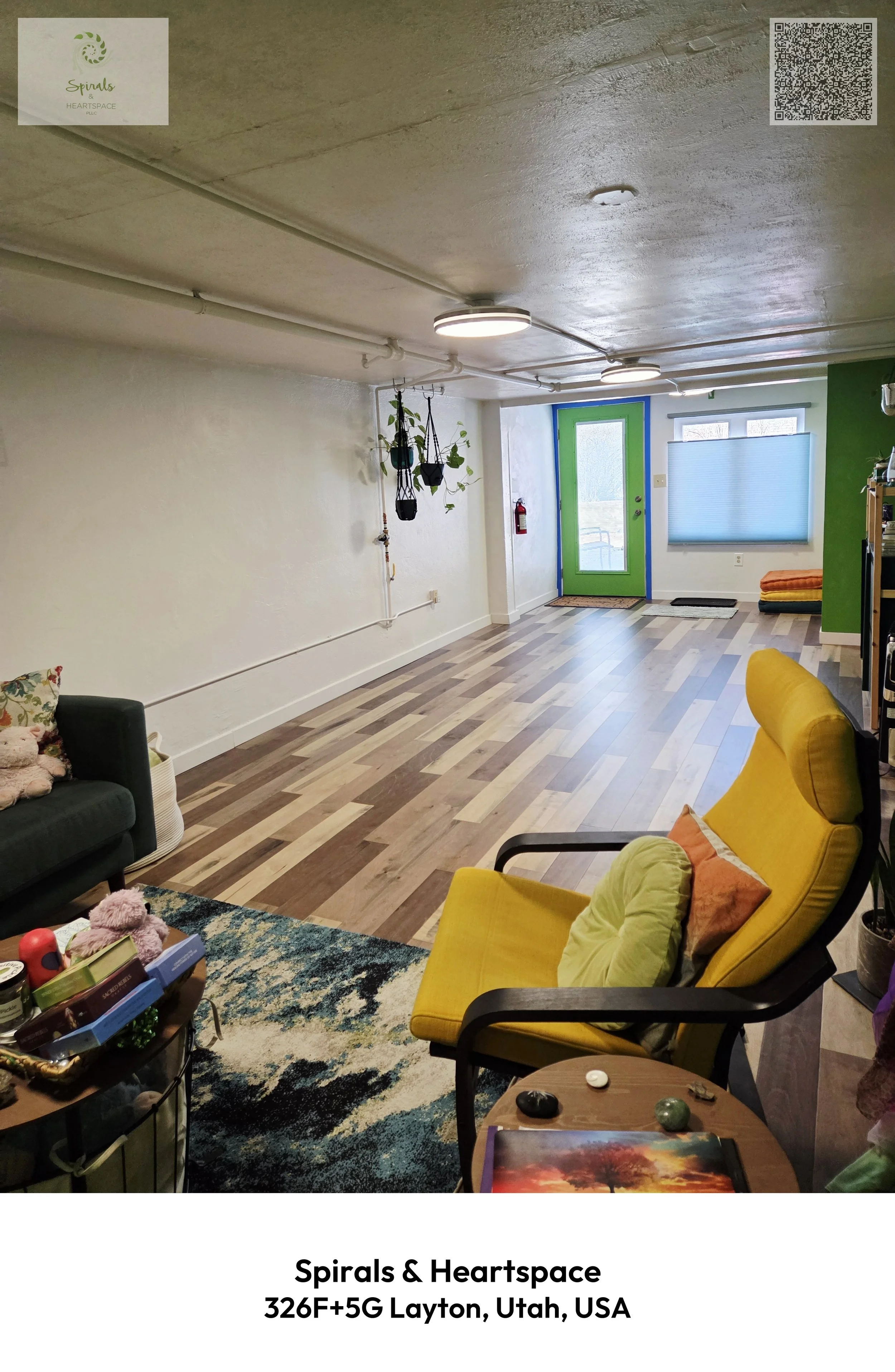
Spirals & Heartspace
Name: Spirals & HeartspaceAddress: 534 W Gentile St, Layton, UT 84041
Phone: (385) 301-5252
Website: https://spiralsandheartspacehealing.com/
Hours:
Sunday: Closed
Monday: 9:30 AM – 7:00 PM
Tuesday: 9:30 AM – 7:00 PM
Wednesday: 9:30 AM – 7:00 PM
Thursday: 9:30 AM – 7:00 PM
Friday: 9:30 AM – 7:00 PM
Saturday: Closed
Open-location code / plus code: 326F+5G Layton, Utah, USA
Coordinates: 41.0604503, -111.9762128
Map/listing URL: https://www.google.com/maps/place/Spirals+%26+Heartspace/@41.0604503,-111.9762128,766m/data=!3m2!1e3!4b1!4m6!3m5!1s0x875303311f1d4d1b:0xc6859e5e3fceafe2!8m2!3d41.0604503!4d-111.9762128!16s%2Fg%2F11x781dbvb
Embed iframe:
Socials:
Instagram: https://www.instagram.com/spiralsheartspace/
LinkedIn: https://www.linkedin.com/company/spirals-and-heartspace-pllc
TikTok: https://www.tiktok.com/@spiralsheartspace
X: https://x.com/SpiralsHea61786
YouTube: https://www.youtube.com/@SpiralsHeartspace
The practice is led by Ande Welling, a licensed clinical mental health counselor with training in dance/movement therapy, somatic work, EMDR, trauma care, relational neuroscience, and embodied attachment.
Listed services include therapy, coaching, consultation, authentic movement, trauma therapy, somatic therapy, grief counseling, movement therapy, and attachment therapy.
The practice serves adults who want a deeper body-aware approach to trauma, anxiety, depression, grief, burnout, self-abandonment, family patterns, and relationship wounds.
Spirals & Heartspace offers both in-person sessions in Layton and online therapy for clients in Utah.
The practice is locally positioned for clients in Layton, Kaysville, Farmington, Syracuse, Clearfield, Clinton, Roy, Ogden, Bountiful, Davis County, and nearby northern Utah communities.
The office is listed at 534 W Gentile St in Layton, with public listing hours Monday through Friday from 9:30 AM to 7:00 PM.
Prospective clients can call (385) 301-5252 or visit https://spiralsandheartspacehealing.com/ to ask about consultation options, session fit, and scheduling.
The public map listing for Spirals & Heartspace can help clients verify the Gentile Street office before planning an in-person appointment.
Popular Questions About Spirals & Heartspace
What is Spirals & Heartspace?
Spirals & Heartspace is a Layton, Utah psychotherapy and coaching practice offering somatic, trauma-focused, expressive arts, movement-based, and attachment-informed support for adults.
Who is the therapist at Spirals & Heartspace?
The official site identifies Ande Welling as the therapist, coach, movement facilitator, and guide behind Spirals & Heartspace. Listed credentials include LCMHC, BC-DMT, NCC, GL-CMA, BSE, EMDR Trained, and CCTP-II.
Where is Spirals & Heartspace located?
The matching public listing and LinkedIn profile list the address as 534 W Gentile St, Layton, UT 84041.
Does Spirals & Heartspace offer online therapy?
Yes. The official FAQ states that therapy is available in person or through a HIPAA-compliant telehealth platform for clients who live in Utah.
What services does Spirals & Heartspace provide?
Listed services include therapy, coaching, consultation, authentic movement, trauma therapy, somatic therapy, grief counseling, movement therapy, and attachment therapy.
What makes somatic therapy different from traditional talk therapy?
The official Layton page explains that somatic therapy works with body sensations, movement, and physical experience because trauma and emotional patterns can be held in the nervous system, not only in thoughts.
Do clients need dance experience for movement therapy?
No. The official Layton FAQ says no dance training or special physical ability is required, and that movement therapy uses a client’s natural capacity for movement to access emotions and process experiences.
Does Spirals & Heartspace accept insurance?
The official FAQ says the practice does not take insurance directly, but may provide superbills or bill for out-of-network benefits when applicable. Clients should confirm current reimbursement options directly before scheduling.
What are Spirals & Heartspace’s listed hours?
The matching public listing shows Monday through Friday from 9:30 AM to 7:00 PM, with Saturday and Sunday closed. Appointment availability should be confirmed directly.
How can I contact Spirals & Heartspace?
Call (385) 301-5252, visit https://spiralsandheartspacehealing.com/, or use the listed social profiles: https://www.instagram.com/spiralsheartspace/, https://www.linkedin.com/company/spirals-and-heartspace-pllc, https://www.tiktok.com/@spiralsheartspace, https://x.com/SpiralsHea61786, and https://www.youtube.com/@SpiralsHeartspace.
Landmarks Near Layton, UT
Spirals & Heartspace is located on West Gentile Street in Layton, Utah, with in-person therapy available locally and online therapy available for Utah residents. Clients near these landmarks can call (385) 301-5252 or visit https://spiralsandheartspacehealing.com/ to ask about somatic therapy, trauma therapy, movement therapy, grief counseling, attachment therapy, and consultation options.
- 534 W Gentile St — The listed office address for Spirals & Heartspace; clients can use the map listing to verify the office before visiting.
- West Gentile Street — The local street connected with the practice’s Layton office location.
- Downtown Layton — A practical local reference point for clients navigating central Layton.
- Layton Hills Mall — A major Layton shopping landmark and useful orientation point for clients traveling through the city.
- Interstate 15 near Layton — A major northern Utah route that helps clients reach Layton from nearby Davis County communities.
- Layton FrontRunner Station — A transit landmark for clients traveling by commuter rail through Davis County.
- Ellison Park — A local park and community landmark in Layton.
- Great Salt Lake Shorelands Preserve — A major natural landmark west of Layton and a recognizable Davis County destination.
- Hill Air Force Base — A major regional landmark near Layton and Clearfield.
- Kaysville — A nearby Davis County city listed in the practice’s surrounding service area.
- Farmington — A nearby Davis County community included in the broader local service-area language.
- Ogden — A nearby northern Utah city; clients can ask whether online Utah therapy or in-person Layton sessions are the best fit.