Most people can name the part of themselves that keeps life organized and the part that wants to run when things get hard. After trauma, those parts often take on extreme jobs. One part may scan for danger all night, another may shut down feelings to get through the day, and a quieter part may carry the pain of what happened. Parts work is the craft of meeting those inner players, learning their languages, and building a safer team inside. It is not about diagnosing multiple personalities. It is about recognizing that a single person can have conflicting impulses, memories, and needs that deserve respect and coordination.
I came to this work through the doorway of the body. Clients were telling me they could talk about their history for hours but felt the terror most in their chest, the numbness in their legs, or a sudden heat in their face that made them lash out. Trauma therapy that only addressed thoughts left them stranded. When we paired careful parts work with somatic therapy, movement, and an attachment-focused relationship, the changes held. Not perfectly, not quickly, but with a steadiness you can build a life on.
What trauma does to an inner system
Trauma shatters continuity. A loud noise is not just a sound, it is the past collapsing into the present. The nervous system does not wait to reason. It takes a survival shortcut, mobilizing or shutting down in milliseconds. Inside, that looks like parts polarizing. One part wants to avoid reminders at any cost. Another part, tired of white-knuckling, presses to confront the hurt directly. A third part might drink or scroll to quiet the whole thing. These are not enemies. They are protectors that learned their jobs under pressure.
In complex trauma, where injuries accumulate over years, parts often operate with old maps. A critical inner voice might be the internalized strategy that kept a caregiver satisfied. A vigilant planner might have prevented chaos in a violent home. If we try to strip these strategies without understanding their origins and intentions, the system will revolt. I have watched brave people push into exposure-based exercises only to feel flooded later, then blame themselves for not being strong enough. The problem usually is not willpower. It is pacing and consent.
First, build enough safety
Safety in trauma therapy is not a promise that nothing hard will happen. It is a set of agreements and a lived experience of choice. Before we ask a client to meet exiled pain or touch a traumatic memory, we confirm there is a way to slow down. We identify signals that mean stop. We practice coming back to the room, orienting to light, sound, and the feeling of feet on the ground. I sometimes spend the whole first session helping someone discover one reliable anchor, often the sensation of the back supported by a chair or the slight movement of the breath at the nostrils. People often underestimate how valuable that is until a wave of panic rises and the anchor gives them traction.
Consent is ongoing. Parts change their minds. A manager part might agree to explore grief, then feel alarmed when sadness nears. I will name this as it happens. Something in you got cautious as we approached the sadness. Would it help to check what it fears could happen next? This slows therapy in a way that speeds results. When protectors feel respected by the therapist and by the client, they gradually allow more access to the material that needs healing.
Mapping parts without making a new prison
Parts models vary in language, but most include three broad roles: protectors that manage life, firefighters that interrupt distress fast, and exiles that carry the raw pain. In practice, the map is only helpful if it increases compassion and flexibility. Instead of slapping labels on every reaction, I sit with the person and attend to the nuances. The binge at midnight might be a firefighter, but it might also be a lonely manager who finally drops its guard and reaches for sugar as a poor stand-in for comfort. The distinction matters because the alliance we build will differ.
I often start with questions that reveal function, not identity. When did this part first start working so hard? What is it trying to prevent? How does it feel about the other parts in your system? If a protector reports that it is exhausted, we might experiment with letting the body feel a tiny dose of support. Place a hand on the sternum, soften the belly by one percent, see whether it remains tolerable. This is somatic therapy in service of parts work. It gives the part a new experience instead of relying on insight alone.
The body is where parts speak loudest
Somatic therapy is not exotic. It is careful attention to how the nervous system organizes around threat and safety. When a critical part is speaking, notice the jaw. When a scared part is near, track the breath. We work with pendulation, moving attention between activation and a neutral or pleasant cue, and titration, taking in small pieces of intensity so the system can digest them. Instead of recounting every detail of a trauma, we might focus on the moment the shoulders lift or the eyes begin to fixate.
Clients sometimes fear that if they let the body feel, they will drown. Numbers help. We scale sensations from 0 to 10 and commit to staying between 3 and 6 in early work. If the number hits 7, we shift to containment. This could https://waylonzjmj807.timeforchangecounselling.com/movement-therapy-for-trauma-recovery-getting-unstuck be pressing the feet gently into the floor, lengthening the exhale by two counts, or orienting to the colors in the room. Over a few sessions, those numbers change. A sensation that was a 7 drops to a 4, not because the story changed, but because the body can hold more without tipping into survival modes.
Movement therapy can be quietly revolutionary here. Micro-movements, like letting the neck turn a few degrees to complete the startle response, often reduce symptoms faster than prolonged talking. I have invited clients to stand and push their palms into mine to test a boundary their body never got to assert. Others find relief in simple rhythmic actions, side-to-side weight shifts, gentle bouncing on the heels. We are not performing. We are giving the nervous system a chance to finish responses that were interrupted by fear, shame, or immobilization.
Attachment therapy as the foundation
Parts work unfolds inside a relationship. If the therapist is inattentive to attachment dynamics, progress stalls. Many trauma survivors carry working models that say closeness is dangerous or help will be withdrawn when it is most needed. Attachment therapy acknowledges these expectations and treats the therapeutic relationship as a real-time arena where corrective experiences can occur.
This might look like tracking how a client anticipates my response to their anger. We name the fear that I might judge or retreat. When I stay, slightly lean forward, and meet the anger without defense, the system registers new data. Trust is not built by perfect attunement. It is built by rupture and repair. If I miss a cue and notice a protector bristle, I say so and ask how it landed. This is not a technique to extract more disclosure. It is a way to communicate, at an embodied level, that the client has influence and choice, which begins to loosen rigid survival patterns.
Attachment also informs pacing outside of session. Someone with disorganized attachment may need tighter session structures and clearer check-ins. Homework that relies on solitary self-soothing might overwhelm a person who never had a dependable caregiver. In those cases, we adapt. Perhaps homework is a five-minute audio recording of my voice guiding an orienting practice, or a supported phone call to a friend immediately after a body scan to ground shared experience.
Grief is not a detour
Trauma therapy that ignores grief becomes brittle. Many clients are not only recovering from what happened, they are mourning what did not happen. A childhood without enough safety. A body that once slept easily. A partner who could not stay sober. Grief counseling here is not scripted crying, it is the permission to name losses and let the body register them in bearable doses. I have used rituals both private and simple, like choosing a stone to represent a lost future and setting it on a shelf for a month. The stone gets handled in sessions when appropriate, then eventually it is taken to a place of meaning and left there. People often report a subtle change in how memories show up afterward, less sticky, less fused with identity.
Ambiguous grief shows up often too. A parent is alive but unreachable due to dementia or personality disorder. A relationship continues but will never be safe. Naming ambiguity reduces self-judgment. The system is no longer trying to resolve an impossible either-or.
A sample session arc
Sessions differ, but a common arc over 60 minutes might look like this:
We check in on the week with an ear for parts that took the lead. Perhaps the vigilant planner kept watch at night. I ask it directly how it is doing, in language that reveals care. As we listen, the client places one hand on the sternum, one on the belly, and we notice the breath without forcing it. We set an intention, small and specific, like getting to know the part that spikes shame after a social interaction. We agree on stop signals.
Next, we invite the shame part to show up at a tolerable distance. The client might locate it as heat in the cheeks. We track that sensation between 3 and 6 on the subjective scale. We alternate attention between the heat and a steadier anchor, the feeling of the chair under the thighs. After two or three rounds, we ask the shame part what job it thinks it has. It might say, I keep you from bragging. We thank it for that effort, then check what it fears if it loosens its grip by one notch. Often, another part appears, perhaps a younger one that fears humiliation.
If the system has capacity, we offer the younger part an image of support, maybe the presence of the client as an adult now, or a neutral caring figure like a teacher. Sometimes a brief movement seals the shift, such as letting the neck turn away from an imagined hostile gaze. We close by orienting to the room, tracking five colors, naming three sounds, and feeling both feet. We debrief and confirm what felt manageable, what felt too close, and what to practice between sessions.
A vignette with permission to be ordinary
Consider Mira, not her real name, in her late thirties, professional, competent, and exhausted. Sleep had been poor for a decade. She cycled between bursts of strict exercise and weeks of numbing with late-night shows and snacks. In our first meeting, Mira described herself as lazy and undisciplined. It took 20 minutes of listening to realize the so-called lazy part arrived only after weeks of hypervigilance at work. We asked the vigilant part how it functioned and it reported scanning constantly for the next problem, a habit it learned when Mira managed her father’s unpredictable moods as a teen.
We did not go near the father for three sessions. We focused on helping the vigilant part feel accompanied. Mira practiced a two-minute check-in at 4 pm, placing a hand on the back of her neck, asking the vigilant one what it had noticed, and writing down three items to address the next morning. The movement piece was tiny, a 30-second shake of the hands and forearms after work, followed by a full-body exhale. Within two weeks, her sleep improved by 30 to 40 minutes per night. When we later approached memories of her father, the vigilant part stayed engaged but not fused. It allowed us to meet a younger sadness without shaming or sprinting away. The grief did not disappear, but it became a visitor the system could host.
Pitfalls and edge cases
Not every client is a candidate for intensive parts work at every moment. When someone is actively psychotic or in the throes of mania, destabilizing inner dialogues can feed symptoms. We prioritize medical stabilization and environmental safety. With acute suicidality or self-harm, protectors often need stronger external supports, such as daily check-ins, means restriction, and sometimes a higher level of care. When substance use is primary, we coordinate with recovery services so that the firefighter part has alternatives that do not harm the body.
Dissociation can be a quiet saboteur. If a client loses time, we back up and build anchoring skills first. I have used a timer to cue micro check-ins every three minutes during difficult segments, eyes open, name your location, feel the chair, resume when ready. Cultural and spiritual contexts matter as well. Some clients frame parts through religious language or ancestral narratives. We do not impose a model that clashes with someone’s deepest commitments. The goal is collaboration, not conversion.
Another pitfall is therapist overenthusiasm. When a client offers a moving inner dialogue, it can be tempting to push. Early successes do not mean the system can handle a flood. The nervous system remains in charge. The art is to leave sessions with a slight surplus of regulation rather than a deficit, so that between-session life is livable.
Working with protective parts without a fight
Protectors usually soften when three conditions are met. First, they feel understood, not pathologized. Second, they experience the client’s growing capacity to handle discomfort. Third, they are offered new roles. A perfectionist can become a discerning editor who works limited hours. A drinker can shift into a guardian that signals when loneliness is climbing past a 5 so connection can be sought earlier.
Language matters. I avoid saying we need you to step aside. Instead, I ask whether a protector would consider moving from the driver’s seat to the passenger seat for 10 minutes while keeping an eye on us. I keep my promises. If I say we will only touch a memory briefly, we do. If we exceed a limit, I apologize and repair it next time. Over time, protectors insist less on all-or-nothing control because they learn that incremental work does not annihilate the system.
How we know therapy is working
Progress in trauma therapy and parts work rarely looks like a straight upward line. Still, there are reliable markers:
- Sleep begins to lengthen or deepen, even by 15 to 30 minutes, without relying solely on numbing strategies. Conflicts between parts become less violent. A critical voice still speaks, but volume and frequency drop, and other parts can answer without collapse. The body tolerates a wider range of sensations. Someone who once jumped at every sound starts to catch the startle and settle more quickly. Attachment behaviors shift. Clients test boundaries, receive repairs, and make bolder requests for healthy connection in and out of therapy. Grief visits feel poignant rather than annihilating. People can cry, breathe, and resume daily life without payback the next day.
What a course of therapy might look like
Short-term work, 6 to 12 sessions, can stabilize sleep, reduce panic attacks, and introduce the inner system. Complex trauma often requires longer commitments, sometimes a year or more, with paced intensives or stretches of consolidation. I prefer blocks of focused work separated by integration time. For example, eight weekly sessions focused on building safety and meeting two or three key protectors, followed by a month with lighter contact and home practices, then a new block if the system is ready.
Coordination with other supports helps. Those in grief counseling groups often process faster because shared witnessing normalizes reactions. Movement therapy classes, gentle ones like tai chi or trauma-sensitive yoga, offer a laboratory to test boundaries and body awareness with others in the room. When attachment injuries are central, couple or family sessions can supplement individual work so that the inner shifts have places to land in real relationships.
Gentle home practices that respect parts
- Two-minute orienting: three times daily, pause, let the eyes move to colors in the room, feel the back supported, notice one pleasant or neutral sensation, name it aloud. Hand on heart, hand on belly: once or twice daily, ask any protector what it needs today, write a one-sentence response without arguing. Micro-movement reset: 30 seconds of wrist and ankle circles, then a slow exhale, used after challenging emails or calls. Boundary push: stand facing a wall, press palms into it with 20 percent effort for 10 seconds, notice the feeling of strength, release and shake the arms lightly. Grief minute: choose a song or object linked to a loss, let yourself feel for 60 seconds, then orient to the room and do something engaging.
These are invitations, not obligations. If a part resists, we get curious before we insist.
When parts work is not the right tool
Some phases of healing call for different approaches. If a client is in an unsafe environment, like ongoing domestic violence, the priority is concrete safety planning, not inner exploration that could dull survival signals. Severe malnutrition or sleep deprivation can make internal work confusing and unproductive. In early sobriety, the nervous system may be too raw for deep memory work. In those cases, we keep attention on practical stabilization while maintaining a respectful dialogue with protectors so they know we have not abandoned them.
Finding a therapist and what to ask
- How do you integrate trauma therapy with somatic therapy and parts work, and how do you decide when to use each? What do you watch for to keep me within a workable range, and what are our stop signals? How do you include attachment therapy principles in your sessions, especially repair after misattunements? What is your approach to grief counseling when losses surface in our work? How will we know therapy is helping, and how do we adjust if I feel worse between sessions?
Listen less for perfect answers and more for humility, clarity, and an appreciation of pacing. A skilled therapist can name their limits and bring curiosity to your system rather than a blueprint they impose on everyone.
The work of befriending
Befriending the inner system is not a sentimental exercise. It is discipline in the service of freedom. Parts that once had to shout learn to speak at normal volume. The body that once braced for impact learns to recognize an ordinary Tuesday afternoon. With time, the system becomes less about competing alarms and more about collaboration. You will still have moods, grief will still visit, and life will still be complicated. What changes is your capacity to meet it without abandoning yourself. That is the quiet revolution at the heart of trauma therapy grounded in somatic awareness, movement, attachment, and care for every part that helped you survive.
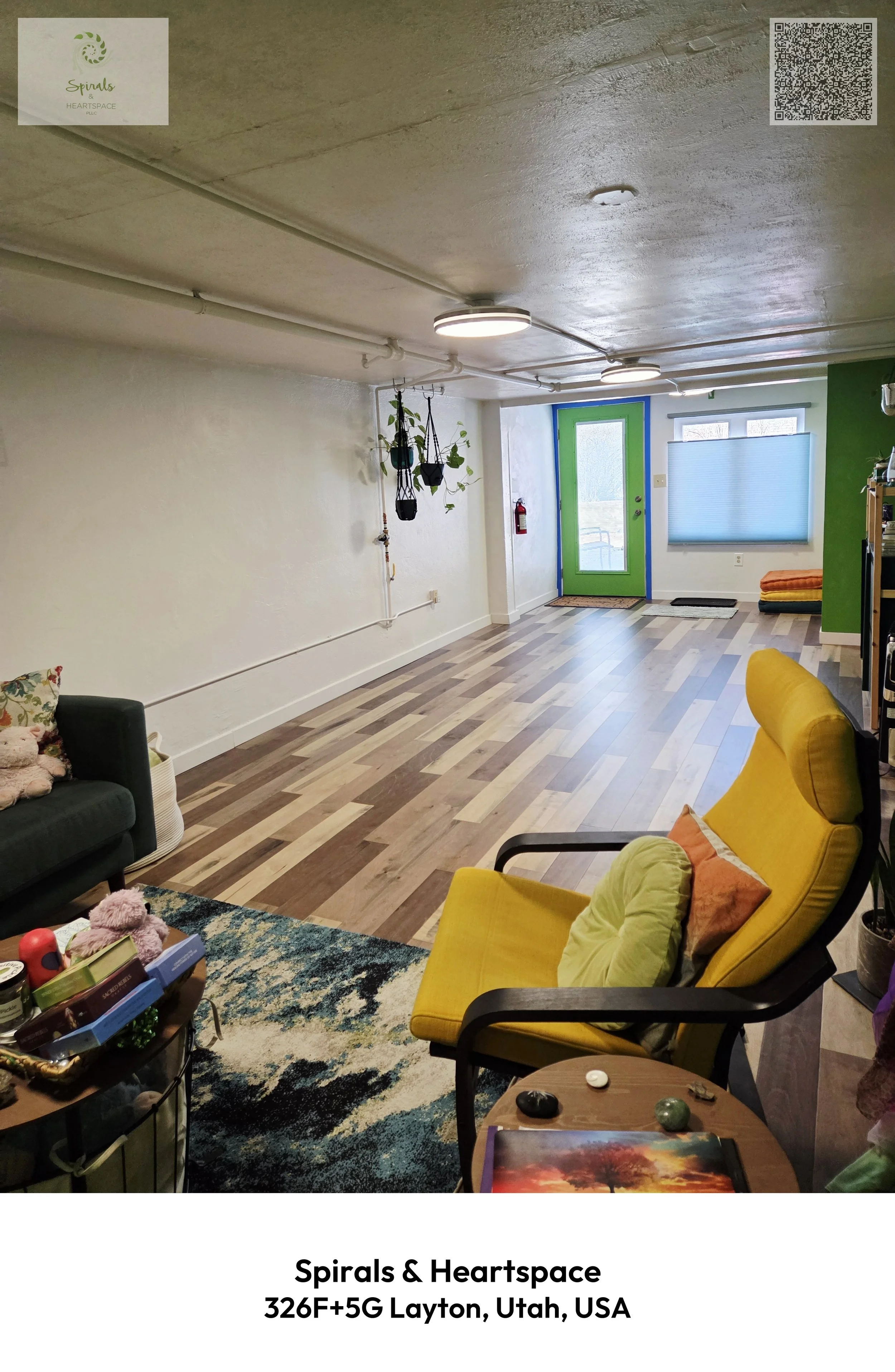
Spirals & Heartspace
Name: Spirals & HeartspaceAddress: 534 W Gentile St, Layton, UT 84041
Phone: (385) 301-5252
Website: https://spiralsandheartspacehealing.com/
Hours:
Sunday: Closed
Monday: 9:30 AM – 7:00 PM
Tuesday: 9:30 AM – 7:00 PM
Wednesday: 9:30 AM – 7:00 PM
Thursday: 9:30 AM – 7:00 PM
Friday: 9:30 AM – 7:00 PM
Saturday: Closed
Open-location code / plus code: 326F+5G Layton, Utah, USA
Coordinates: 41.0604503, -111.9762128
Map/listing URL: https://www.google.com/maps/place/Spirals+%26+Heartspace/@41.0604503,-111.9762128,766m/data=!3m2!1e3!4b1!4m6!3m5!1s0x875303311f1d4d1b:0xc6859e5e3fceafe2!8m2!3d41.0604503!4d-111.9762128!16s%2Fg%2F11x781dbvb
Embed iframe:
Socials:
Instagram: https://www.instagram.com/spiralsheartspace/
LinkedIn: https://www.linkedin.com/company/spirals-and-heartspace-pllc
TikTok: https://www.tiktok.com/@spiralsheartspace
X: https://x.com/SpiralsHea61786
YouTube: https://www.youtube.com/@SpiralsHeartspace
The practice is led by Ande Welling, a licensed clinical mental health counselor with training in dance/movement therapy, somatic work, EMDR, trauma care, relational neuroscience, and embodied attachment.
Listed services include therapy, coaching, consultation, authentic movement, trauma therapy, somatic therapy, grief counseling, movement therapy, and attachment therapy.
The practice serves adults who want a deeper body-aware approach to trauma, anxiety, depression, grief, burnout, self-abandonment, family patterns, and relationship wounds.
Spirals & Heartspace offers both in-person sessions in Layton and online therapy for clients in Utah.
The practice is locally positioned for clients in Layton, Kaysville, Farmington, Syracuse, Clearfield, Clinton, Roy, Ogden, Bountiful, Davis County, and nearby northern Utah communities.
The office is listed at 534 W Gentile St in Layton, with public listing hours Monday through Friday from 9:30 AM to 7:00 PM.
Prospective clients can call (385) 301-5252 or visit https://spiralsandheartspacehealing.com/ to ask about consultation options, session fit, and scheduling.
The public map listing for Spirals & Heartspace can help clients verify the Gentile Street office before planning an in-person appointment.
Popular Questions About Spirals & Heartspace
What is Spirals & Heartspace?
Spirals & Heartspace is a Layton, Utah psychotherapy and coaching practice offering somatic, trauma-focused, expressive arts, movement-based, and attachment-informed support for adults.
Who is the therapist at Spirals & Heartspace?
The official site identifies Ande Welling as the therapist, coach, movement facilitator, and guide behind Spirals & Heartspace. Listed credentials include LCMHC, BC-DMT, NCC, GL-CMA, BSE, EMDR Trained, and CCTP-II.
Where is Spirals & Heartspace located?
The matching public listing and LinkedIn profile list the address as 534 W Gentile St, Layton, UT 84041.
Does Spirals & Heartspace offer online therapy?
Yes. The official FAQ states that therapy is available in person or through a HIPAA-compliant telehealth platform for clients who live in Utah.
What services does Spirals & Heartspace provide?
Listed services include therapy, coaching, consultation, authentic movement, trauma therapy, somatic therapy, grief counseling, movement therapy, and attachment therapy.
What makes somatic therapy different from traditional talk therapy?
The official Layton page explains that somatic therapy works with body sensations, movement, and physical experience because trauma and emotional patterns can be held in the nervous system, not only in thoughts.
Do clients need dance experience for movement therapy?
No. The official Layton FAQ says no dance training or special physical ability is required, and that movement therapy uses a client’s natural capacity for movement to access emotions and process experiences.
Does Spirals & Heartspace accept insurance?
The official FAQ says the practice does not take insurance directly, but may provide superbills or bill for out-of-network benefits when applicable. Clients should confirm current reimbursement options directly before scheduling.
What are Spirals & Heartspace’s listed hours?
The matching public listing shows Monday through Friday from 9:30 AM to 7:00 PM, with Saturday and Sunday closed. Appointment availability should be confirmed directly.
How can I contact Spirals & Heartspace?
Call (385) 301-5252, visit https://spiralsandheartspacehealing.com/, or use the listed social profiles: https://www.instagram.com/spiralsheartspace/, https://www.linkedin.com/company/spirals-and-heartspace-pllc, https://www.tiktok.com/@spiralsheartspace, https://x.com/SpiralsHea61786, and https://www.youtube.com/@SpiralsHeartspace.
Landmarks Near Layton, UT
Spirals & Heartspace is located on West Gentile Street in Layton, Utah, with in-person therapy available locally and online therapy available for Utah residents. Clients near these landmarks can call (385) 301-5252 or visit https://spiralsandheartspacehealing.com/ to ask about somatic therapy, trauma therapy, movement therapy, grief counseling, attachment therapy, and consultation options.
- 534 W Gentile St — The listed office address for Spirals & Heartspace; clients can use the map listing to verify the office before visiting.
- West Gentile Street — The local street connected with the practice’s Layton office location.
- Downtown Layton — A practical local reference point for clients navigating central Layton.
- Layton Hills Mall — A major Layton shopping landmark and useful orientation point for clients traveling through the city.
- Interstate 15 near Layton — A major northern Utah route that helps clients reach Layton from nearby Davis County communities.
- Layton FrontRunner Station — A transit landmark for clients traveling by commuter rail through Davis County.
- Ellison Park — A local park and community landmark in Layton.
- Great Salt Lake Shorelands Preserve — A major natural landmark west of Layton and a recognizable Davis County destination.
- Hill Air Force Base — A major regional landmark near Layton and Clearfield.
- Kaysville — A nearby Davis County city listed in the practice’s surrounding service area.
- Farmington — A nearby Davis County community included in the broader local service-area language.
- Ogden — A nearby northern Utah city; clients can ask whether online Utah therapy or in-person Layton sessions are the best fit.