Touch can be medicine or a minefield. In somatic therapy, where the body’s signals guide the work, the line between healing contact and harmful intrusion depends on timing, clarity, skill, and an honest reading of power. I have sat with clients who found a light hand on the back life changing, easing years of bracing in a single breath. I have also repaired the aftermath of touch that was offered without enough context or choice, where a client felt cornered into agreement because they did not want to disappoint a respected therapist. Safety does not come from a technique, it comes from the agreements and conditions that make any technique optional, reversible, and accountable.
What somatic therapy is, and what it is not
Somatic therapy uses the body’s felt experience as data and direction. In practice that can include interoception exercises, mapping sensation, breathwork, movement, and sometimes touch. The touch might be direct, such as a therapist stabilizing a shoulder while a client notices breath, or indirect, such as the therapist guiding the client’s own hands to a resource spot like the sternum or the rib cage. Many sessions have no touch at all. The core is not contact, it is consent to be with the body in a tolerable, useful way.
Clients and new clinicians sometimes assume somatic work means massage or manual adjustments. Clinical somatic therapy sits inside psychotherapeutic scope, not bodywork alone. The therapist tracks nervous system states, pacing, and meaning, and folds touch, if used, into a clear therapeutic aim. If a session becomes about fixing a body part rather than cultivating regulation and choice, the frame has slipped.
The ethics underneath the method
Licensing boards, professional associations, and supervisors repeat the same two priorities: avoid harm and avoid exploitation. Touch crosses a deeply personal boundary, and it’s layered with history. Trauma therapy must account for those layers from the first consultation. The therapist carries more power, more training, and often more comfort with the method. That asymmetry means the therapist owns the burden of clarity. Vague consent is not consent.
I keep three questions visible to myself before any contact: What is the therapeutic purpose right now, how will I know if it is helping, and how will I stop the moment it is not? If I cannot answer those in concrete terms, we do not use touch.
Regulatory landscapes vary by state and country. Some boards require additional training or explicit documentation for touch. A cautious stance serves everyone. If you are not sure whether a kind of contact fits your license and training, consult, document, or don’t do it.
Consent that breathes
People often describe consent as a signature, but in the therapy room consent is a living process. An initial discussion belongs in the intake, where you outline possibilities, limits, and alternatives. Do not fold that into a long stack of forms. Say it out loud in plain language, then hand the choice back to the client repeatedly and predictably.

When I invite touch, I slow down. I will name the exact contact, the reason, where my hands will be, how much pressure I intend, and for how long. Then I ask what the client imagines it will feel like, what concerns they have, and what signals would tell us to stop. I give examples because social habits can make decline feel rude. I say, If you want to try this for ten seconds and then stop, that is perfect data. If you prefer to use your own hands while I guide, we can do that. If you want to skip touch entirely, there are other routes.
Small choices add up. Do you prefer my hand on top of the blanket or under the edge so it does not slip? Your left shoulder or right? Sitting or lying down? The aim is not to choreograph for its own sake, it is to demonstrate that they lead and that change is welcome in the moment.
A client’s quick checklist of rights
- You can say no to touch, or change your mind at any point, without needing to justify it. You can ask what the purpose is, how long it will last, and what other options exist. You can request that you make the first move, such as placing your own hand where suggested. You can set conditions, like leaving shoes on, staying seated, or keeping a blanket between you and the therapist’s hand. You can ask for a pause to notice what you feel before deciding whether to continue.
I post a version of these on the wall, and I reread them myself. It keeps the spirit of permission active, not theoretical.
Boundaries that show in the room
Therapists sometimes state good policies, then erode them with subtle pressure. If the calendar is tight and I seem invested in completing a planned intervention, a client will often swallow discomfort and agree. Pressure lives in tone, timing, and body language. I track my own urgency. If I feel rushed, we do not introduce new kinds of touch. If the client fawns, fixes their gaze on my face for approval, or moves into freeze, I call it out gently and step back. The work of attachment therapy often brings these patterns to the surface. In that frame, the boundary is not about the hand, it is about a reliable adult who adjusts to the client’s nervous system instead of demanding that the client adjust to theirs.
The room itself supports safety. Clear sightlines, exits unobstructed, chairs that can shift, lighting that can dim but never leaves us in half-dark, a clean blanket within reach. If I am going to place a hand near the diaphragm, I ask the client whether we need to reposition https://pastelink.net/59isg2b2 for comfort and modesty. Loose clothing that a client chooses, not a gown that exposes skin, keeps dignity intact.
When touch is not the first move in trauma therapy
In trauma therapy, the body has learned to survive by tightening, numbing, scanning, or exploding. Touch can derail that learning or amplify it. I often spend three to eight sessions building interoceptive skill and co-regulation through breath, imagery, and micro-movements before suggesting direct contact. The early goals are simple. Notice a neutral sensation like the weight of your legs. Expand and shrink attention like a camera lens. Locate a resource sensation that feels even slightly less charged than the rest.
If a client carries complex trauma with mixed attachment, the first round of contact might be their own hand on their chest while I track breath with my eyes. We do not advance to my hand until they can articulate what they feel and ask for a change without apology. That threshold protects both of us.
Grief counseling and the tenderness of timing
Grief changes time and gravity. In acute grief, the body slumps or braces, breath loses rhythm, and people often crave contact while also feeling raw to it. In the first weeks after a loss, words like stabilize or hold can mean something very different to a client than to a clinician. I ask explicitly what kinds of everyday touch feel helpful right now and what kinds feel unbearable. If a client says that hugs from family land like demands, I will not suggest a hand on the back that mimics that sensation. The somatic focus might stay with breath pacing, grounding through the feet, and slow movement that reintroduces agency.
Later in grief counseling, when waves still come but the shore is visible, brief contact can support regulation during a surge. A lightly cued hand on the forearm for 15 seconds, followed by a pause and check-in, sometimes helps the client feel less alone without tipping into overwhelm. The limit is not the therapist’s sense of how much is fine, it is the client’s moment-to-moment body response.
Movement therapy and groups, where touch can ripple
In Movement therapy, the room’s energy multiplies. A single misattuned touch in a group can echo as others watch and interpret. I default to no-touch group formats unless the structure includes clear opt-in stations. Choice must be visible, not inferred. Colored wristbands are one tool, but they can stigmatize. I prefer a rotating invitation format. At designated points, I offer three parallel practices: solo movement, partnered mirroring without contact, and an assisted option that involves therapist-guided contact to track breath or joint alignment. Participants can switch lanes at any time. I narrate permission out loud every cycle.
If a group includes survivors of interpersonal violence, I will not pair them in exercises involving spontaneous contact unless I know their preferences well. Even mirroring at a distance can feel intrusive for some. The goal is recruitment of curiosity in the body, not exposure.
Attachment therapy, repair, and the promise of a predictable adult
Attachment therapy often centers on the felt memory of relationship. Here, touch is a symbol as much as a sensation. When I place a hand on a client’s upper back during a difficult disclosure, I am sending a message about presence and reliability. If that message conflicts with the client’s early life maps, rupture is likely. That is not a failure, it is an opening. The repair matters more than the initial act.
I have made mistakes. Years ago, with a client who presented as steady and articulate, I offered a brief hand at the scapula while we tracked a swell of grief. They nodded yes, then stiffened. I removed my hand, said what I saw, and we paused. The next week they told me the touch felt kind in the moment but also replayed a parent’s way of soothing that always came with a cost. We used that data to rework the frame. From then on, the client would initiate any contact. It slowed the pace of sessions for a while, then deepened trust. That client taught me as much about boundary repair as any training.
How to repair a rupture around touch
- Name it simply. I think my hand on your back did not land as we both hoped. Restore choice. We are not going to use touch unless or until you ask for it, and you do not need to decide today. Gather details collaboratively. Can you share what you noticed in your body right before, during, and after? I will share what I observed too. Make a plan you can measure. For the next three sessions, we will keep contact indirect, like guiding your own hands, and check the plan each time. Document and consult. Note the event, your observations, the agreement, and bring it to supervision to widen your perspective.
Rupture repair is not a script. It is attention, humility, and follow through. The documentation step is not bureaucratic, it is part of accountability.
Cultural, gender, and neurotype considerations
Touch is filtered through culture. In some cultural contexts, elders and peers touch freely, and the absence of contact feels cold. In others, casual touch reads as disrespect. Ask, and ask again. Do not assume that a client from a touch-avoidant culture will never want contact, or that a client from a high-touch culture will. Gender dynamics also matter. A male therapist placing a hand near the diaphragm of a female client deserves extra permissions, extra sequencing, and often a third element like a towel or client’s own hands as a bridge. Nonbinary and trans clients may carry specific histories of medical touch that complicate clinical contact. Invite that reality in, and plan accordingly.
For autistic clients or those with sensory processing sensitivities, direct touch can flood the system. Pressure that is consistent rather than light, and contact through firm props like a weighted blanket the client controls, often works better. Always let the client decide the intensity and duration, and plan for explicit stop signals that are easy to use without speech.
The therapist’s body is part of the intervention
Your posture, breath rate, and micro-movements are read, often subconsciously. If you hold your breath while you wait for the client’s response to your touch invitation, they will sense your hope or fear and try to take care of you. That flips the attachment script and erodes safety. Before inviting contact, I ground myself. Two slow exhales, shoulders down, eyes soft, feet on the floor. If I cannot settle, I name that and defer.
Therapists who grew up in chaotic homes sometimes use touch to find connection they did not have. Training and supervision can help, but you must own your countertransference. If you feel unusually pleased when a client accepts touch, or unusually rejected when they decline, that is a flag to slow down and seek consultation.
Documentation without killing the moment
Some practitioners worry that documenting touch in detail will make sessions feel clinical. In my experience, clear notes free you to be present. I record the purpose of the contact, the client’s stated preferences, the exact placement and duration, observed responses, and any changes we decided on. When a client returns months later and asks what we did that felt safe then, I can answer from the record rather than memory shaped by my narrative.
Working within grief, trauma, and movement, without contact at all
A strong somatic session can unfold without a single touch. In a trauma therapy hour, a client can learn to map activation on a 0 to 10 scale, track breath ratios, and test micro-orienting movements like turning the head two degrees to one side and noticing what changes. In grief counseling, we can practice timed breathing, the 4-7-8 cadence or a gentle 5-5, and foot presses into the floor until the legs wake back up. In Movement therapy, we can improvise with weight shifts and joint circles that reclaim agency. In attachment therapy, we can rehearse asking for space, not closeness, and still stay connected.
Offering touch when it is not needed can undercut the core learning. The body discovers that it can stead itself, not only be steadied. That autonomy is central to recovery.
Red flags and firm no’s
Some boundaries are not negotiable. I do not use touch when a client is dissociated to the point of losing time or cannot track their body states. I do not use touch when a client has a strong history of sexual trauma and is early in treatment unless we have built a very granular consent process and a clear repair plan. I do not use touch to contain a panic attack in progress. Instead, I coach rhythm and orientation, eyes to the corners of the room, slow naming of objects, breath out longer than breath in, feet firm on the floor.
If a client asks for hugs at the end of every session, I assess the meaning. Is this a ritual of closure that supports them, or a bid to fill a relational void in a way that blurs lines? In some cases, with clear limits and periodic review, a brief side-hug goodbye can be ethical. In many, it is safer to develop other closure rituals that do not involve contact. The test is whether the ritual increases or decreases dependency and whether saying no remains easy.
Practical scripts that help
Language matters. Scripts are not cages, they are training wheels that let you focus on tone and pacing.
Try this when inviting contact: I have an idea that might help your diaphragm find room. It would involve my hand resting on top of the blanket here for about 20 seconds while you notice your breath. If you prefer to place your own hand there while I guide, or skip touch entirely, both are solid options. What feels right today?
And this when pausing: I am going to lift my hand now and we will wait for ten breaths to see what shifts. You can tell me to stop sooner, or ask to continue longer.

And this when something goes off track: I saw your shoulders rise as my hand came closer. I might have moved too fast. Let’s step back and check what your body wants now.
Small phrases like today, might, and we will wait keep the tone collaborative and time bound.
Telehealth and remote somatic options
During remote sessions, touch boundaries simplify, but the work does not. I often use guided self-contact, with the client placing one hand on the sternum and one on the lower ribs while we pace breath. The same consent sequence applies. I also ask about the room. Are you alone, is the door closed, do you feel safe trying this here? Some clients prefer to reserve any self-contact for in-person sessions because family at home changes their sense of privacy. That is valid. Alternatives include visual tracking, orienting exercises, and movement in and out of the camera’s frame to reclaim choice about visibility.
Training, supervision, and staying current
Competence in touch is not a weekend skill. Formal coursework in somatic therapy methods, practice with feedback, and ongoing supervision are minimums. Seek out programs that teach consent as a method, not a preface. Good training will include work with trauma therapy protocols, grief counseling nuances, movement therapy structures, and attachment therapy dynamics. It will also include ethics modules that cover documentation, scope of practice, and power analysis.
Peer consultation keeps you honest. Share anonymized cases where touch went well and where it did not. Learn from colleagues who work in different settings, like hospitals, community clinics, and private practice, because the same contact lives differently in each context.
Measuring outcomes without reducing the person
We measure to learn, not to grade. Track short-term changes, such as shifts in breath rate, muscle tone, and reported anxiety in the 10 minutes after contact. Track medium-term changes across four to eight sessions, including whether the client asks for more or less contact, whether they initiate more self-soothing, and whether daily function improves. Track long-term changes in attachment capacity, like the ability to tolerate closeness without collapse or distance without panic. If touch does not move those dials, adjust or discontinue it.
The quiet standard: safety first, choice always
The most reliable indicator that your touch boundaries are sound is not a form, it is the ease with which clients say no, change their minds, and ask for something different. I listen for apologies when they set a limit. Each sorry is a signal that the social script still dominates, that safety is not yet embodied. My job is to keep inviting and protecting the boundary until no apology is needed.
Somatic therapy, done well, treats touch as one tool among many. Trauma therapy keeps it paced and reversible. Grief counseling respects the raw edge without rushing comfort. Movement therapy protects choice in the crowd. Attachment therapy builds a relationship where boundaries are not conditions of love but expressions of it. The common thread is consent that breathes, skill that grows, and a therapist who holds power lightly and responsibly.
Safety first is not a slogan. It is a set of habits, renewed every session: slow invitations, explicit alternatives, visible exits, short contact, frequent pauses, honest repair. When those habits anchor the work, touch can support something larger than itself, a body remembering that it gets to decide.
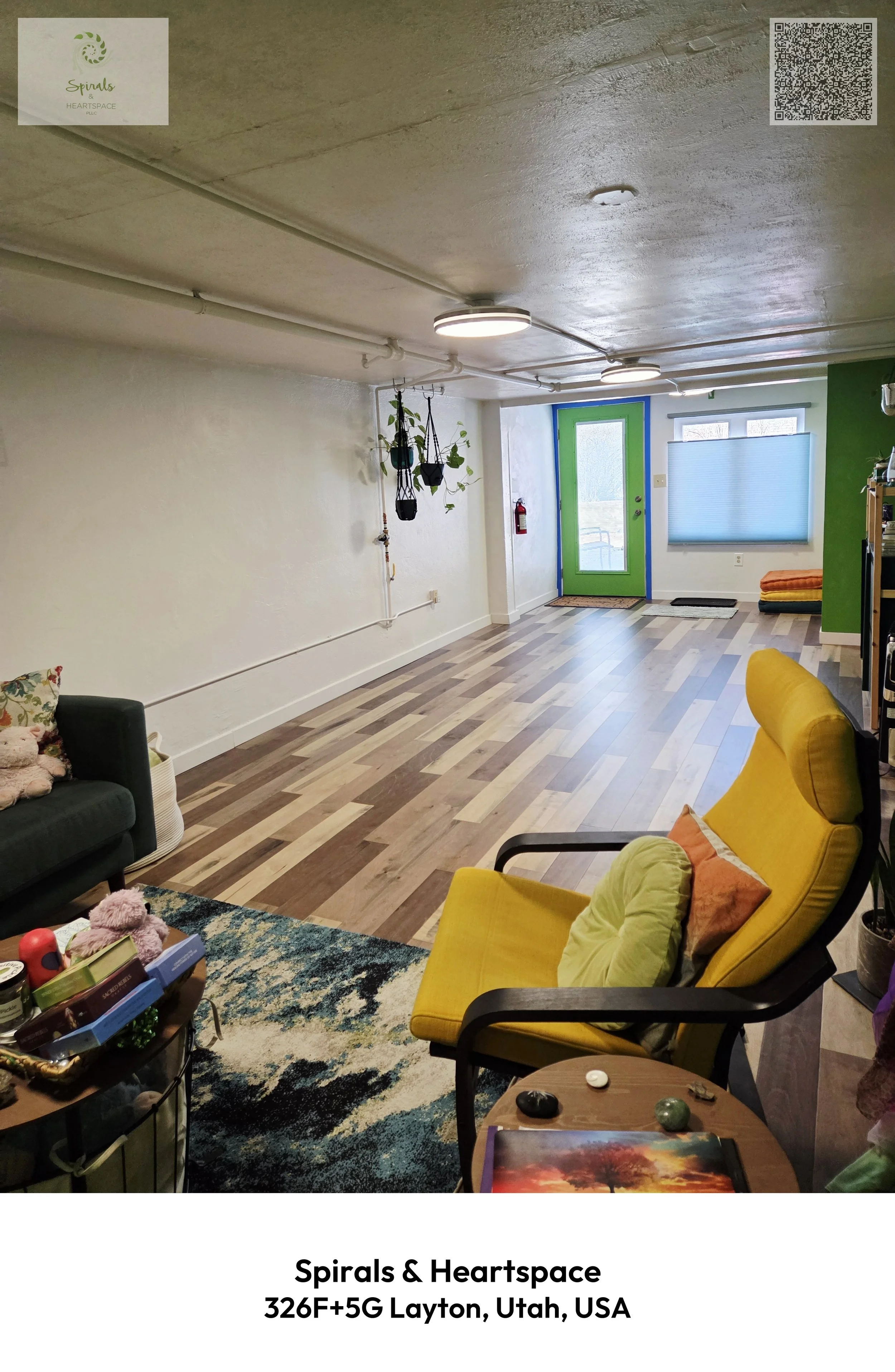
Spirals & Heartspace
Name: Spirals & HeartspaceAddress: 534 W Gentile St, Layton, UT 84041
Phone: (385) 301-5252
Website: https://spiralsandheartspacehealing.com/
Hours:
Sunday: Closed
Monday: 9:30 AM – 7:00 PM
Tuesday: 9:30 AM – 7:00 PM
Wednesday: 9:30 AM – 7:00 PM
Thursday: 9:30 AM – 7:00 PM
Friday: 9:30 AM – 7:00 PM
Saturday: Closed
Open-location code / plus code: 326F+5G Layton, Utah, USA
Coordinates: 41.0604503, -111.9762128
Map/listing URL: https://www.google.com/maps/place/Spirals+%26+Heartspace/@41.0604503,-111.9762128,766m/data=!3m2!1e3!4b1!4m6!3m5!1s0x875303311f1d4d1b:0xc6859e5e3fceafe2!8m2!3d41.0604503!4d-111.9762128!16s%2Fg%2F11x781dbvb
Embed iframe:
Socials:
Instagram: https://www.instagram.com/spiralsheartspace/
LinkedIn: https://www.linkedin.com/company/spirals-and-heartspace-pllc
TikTok: https://www.tiktok.com/@spiralsheartspace
X: https://x.com/SpiralsHea61786
YouTube: https://www.youtube.com/@SpiralsHeartspace
The practice is led by Ande Welling, a licensed clinical mental health counselor with training in dance/movement therapy, somatic work, EMDR, trauma care, relational neuroscience, and embodied attachment.
Listed services include therapy, coaching, consultation, authentic movement, trauma therapy, somatic therapy, grief counseling, movement therapy, and attachment therapy.
The practice serves adults who want a deeper body-aware approach to trauma, anxiety, depression, grief, burnout, self-abandonment, family patterns, and relationship wounds.
Spirals & Heartspace offers both in-person sessions in Layton and online therapy for clients in Utah.
The practice is locally positioned for clients in Layton, Kaysville, Farmington, Syracuse, Clearfield, Clinton, Roy, Ogden, Bountiful, Davis County, and nearby northern Utah communities.
The office is listed at 534 W Gentile St in Layton, with public listing hours Monday through Friday from 9:30 AM to 7:00 PM.
Prospective clients can call (385) 301-5252 or visit https://spiralsandheartspacehealing.com/ to ask about consultation options, session fit, and scheduling.
The public map listing for Spirals & Heartspace can help clients verify the Gentile Street office before planning an in-person appointment.
Popular Questions About Spirals & Heartspace
What is Spirals & Heartspace?
Spirals & Heartspace is a Layton, Utah psychotherapy and coaching practice offering somatic, trauma-focused, expressive arts, movement-based, and attachment-informed support for adults.
Who is the therapist at Spirals & Heartspace?
The official site identifies Ande Welling as the therapist, coach, movement facilitator, and guide behind Spirals & Heartspace. Listed credentials include LCMHC, BC-DMT, NCC, GL-CMA, BSE, EMDR Trained, and CCTP-II.
Where is Spirals & Heartspace located?
The matching public listing and LinkedIn profile list the address as 534 W Gentile St, Layton, UT 84041.
Does Spirals & Heartspace offer online therapy?
Yes. The official FAQ states that therapy is available in person or through a HIPAA-compliant telehealth platform for clients who live in Utah.
What services does Spirals & Heartspace provide?
Listed services include therapy, coaching, consultation, authentic movement, trauma therapy, somatic therapy, grief counseling, movement therapy, and attachment therapy.
What makes somatic therapy different from traditional talk therapy?
The official Layton page explains that somatic therapy works with body sensations, movement, and physical experience because trauma and emotional patterns can be held in the nervous system, not only in thoughts.
Do clients need dance experience for movement therapy?
No. The official Layton FAQ says no dance training or special physical ability is required, and that movement therapy uses a client’s natural capacity for movement to access emotions and process experiences.
Does Spirals & Heartspace accept insurance?
The official FAQ says the practice does not take insurance directly, but may provide superbills or bill for out-of-network benefits when applicable. Clients should confirm current reimbursement options directly before scheduling.
What are Spirals & Heartspace’s listed hours?
The matching public listing shows Monday through Friday from 9:30 AM to 7:00 PM, with Saturday and Sunday closed. Appointment availability should be confirmed directly.
How can I contact Spirals & Heartspace?
Call (385) 301-5252, visit https://spiralsandheartspacehealing.com/, or use the listed social profiles: https://www.instagram.com/spiralsheartspace/, https://www.linkedin.com/company/spirals-and-heartspace-pllc, https://www.tiktok.com/@spiralsheartspace, https://x.com/SpiralsHea61786, and https://www.youtube.com/@SpiralsHeartspace.
Landmarks Near Layton, UT
Spirals & Heartspace is located on West Gentile Street in Layton, Utah, with in-person therapy available locally and online therapy available for Utah residents. Clients near these landmarks can call (385) 301-5252 or visit https://spiralsandheartspacehealing.com/ to ask about somatic therapy, trauma therapy, movement therapy, grief counseling, attachment therapy, and consultation options.
- 534 W Gentile St — The listed office address for Spirals & Heartspace; clients can use the map listing to verify the office before visiting.
- West Gentile Street — The local street connected with the practice’s Layton office location.
- Downtown Layton — A practical local reference point for clients navigating central Layton.
- Layton Hills Mall — A major Layton shopping landmark and useful orientation point for clients traveling through the city.
- Interstate 15 near Layton — A major northern Utah route that helps clients reach Layton from nearby Davis County communities.
- Layton FrontRunner Station — A transit landmark for clients traveling by commuter rail through Davis County.
- Ellison Park — A local park and community landmark in Layton.
- Great Salt Lake Shorelands Preserve — A major natural landmark west of Layton and a recognizable Davis County destination.
- Hill Air Force Base — A major regional landmark near Layton and Clearfield.
- Kaysville — A nearby Davis County city listed in the practice’s surrounding service area.
- Farmington — A nearby Davis County community included in the broader local service-area language.
- Ogden — A nearby northern Utah city; clients can ask whether online Utah therapy or in-person Layton sessions are the best fit.