Trauma freezes the body in ways talk alone cannot thaw. If you have ever noticed your shoulders creep toward your ears in a grocery line, or felt your legs stiffen when a door slams, you have already seen how threat lives in tissue and posture. Movement therapy gives that frozen machinery a way to restart. It does not replace trauma therapy that explores memories or beliefs, it complements it by inviting the nervous system to finish what got interrupted: the push, the reach, the run, the collapse into safe arms. When those unfinished movements complete in present time, many people report that the same stories start to feel less charged, and daily life opens a little wider.
Why bodies get stuck
The nervous system has a simple job, survive, and a complex way of doing it. In the presence of danger, our bodies mobilize. Heart rate climbs, muscles prime, attention narrows. If escape is impossible, the body often shifts into a freeze or collapse chemistry. Those states are efficient in immediate crisis, but they can become overlearned patterns. Such patterns look ordinary from the outside: shallow breathing, a tight jaw, a tendency to hold the breath while concentrating, a reflex to appease. Over time, the pattern shapes the person. Tremors after a tough day, digestive trouble without a clear medical cause, a constant need to scan the room, these can all be residues of high gear or shutdown held for too long.
Classic psychotherapy helps name and understand the history. Somatic therapy adds a second lane, the direct language of muscle tone, breath, orienting, and contact. Movement therapy is one branch of somatic therapy. It takes these elements and organizes them into structured, exploratory, often creative sessions that use motion as both assessment and intervention.
What movement therapy actually looks like
People sometimes imagine dance choreography. That can be part of it, but in clinical settings, movement sessions are quieter and more attuned. A first session often includes standing up and noticing: where your weight lands on your feet, what moves easily, what refuses. If a client freezes when visually scanning the room, we might start with micro turns of the head, just 10 percent of full range, paired with a breath that does not force anything. If someone shrinks their shoulders when asked about a parent, we might explore raising and lowering the shoulders on purpose, adding a tiny push of the feet into the floor to see whether the chest can widen a few millimeters.
I keep sessions short on purpose when we work with high activation. Forty five to sixty minutes is standard, but the movement intensives often happen in bursts: two minutes of specific motion, one minute of stillness, a check in, then repeat. People rarely need big catharsis. They need a sequence of tolerable completions. When you complete a reach toward what you want, while staying connected to yourself and a supportive other, the nervous system registers a corrective memory.
Safety, consent, and pacing
Trauma took choice away. Movement therapy must return it and never take it again. I make that explicit. You will not be asked to push through pain or reenact threat. We name options, we choose together, then we titrate. Pacing is the craft. Too slow and there is boredom or mistrust, too fast and the old defenses lock in harder. I look for early signs of overwhelm: a glassy stare, hands that go cold, a voice that gets too loud or too faint, a burst of laughter that does not match the content. When those appear, we throttle back. We might shift to grounding through the feet or orienting to the room. Sometimes the safest intervention is a sip of water and a look out the window.
Touch is sometimes part of this work, for example guiding a rib to widen during a breath or offering a steady hand at the scapula during a forward reach. It should always be optional, negotiated in advance, and adjusted moment to moment. Many of my clients do the bulk of their movement work with no touch at all.
A short map of the nervous system, in practice
You do not need a textbook to do this well, but a shared frame helps. Think of three broad states that the body toggles among: mobilized, settled, and shut down. Movement interventions aim to make those states more flexible and more available by choice.
- If you rev high, we practice deceleration with long exhales, slow weight shifts, and eyes that widen softly to take in the periphery. We learn the feel of a throttle that turns down without cutting the engine. If you drop low, we practice gentle activation: stamping at ten percent power, humming while rolling the shoulders, eyes lifting to the horizon. We build tone without pressure, a low flame that stays lit. If you vacillate fast, we build a bridge between. That often looks like small bouts of movement followed by active rest, tracking how the body returns instead of forcing it to stay put.
I avoid strict models that promise to categorize every reaction. People are messier. What matters is whether you can notice where you are and shift one notch toward where you want to be.
Movement therapy within trauma therapy, grief counseling, and attachment therapy
Trauma therapy tends to braid three themes: safety, memory, and meaning. Movement supports all three. Safety is embodied. You can say you feel safe, yet your hip flexors tell the truth. Memory is layered. Sometimes the image of a car accident is less potent than the shoulder blade that still braces for impact. Meaning develops when experience changes, not just when it is explained. When the body learns that a foot can push and a boundary can hold, the story often softens on its own.
Grief counseling benefits from motion because grief has a tempo. It swells and recedes. Early grief often wants containment, a wrap or curl that lets tears fall without fear of falling apart. Later grief often wants movement, a walk at dawn, a sway while listening to a song that belonged to the person who died. I do not force any of this. We listen for what the grief wants today. If it wants stillness, we dignify that. If it wants wailing and pounding pillows, we respect the nervous system’s limits and the building’s neighbors.
Attachment therapy focuses on how we turn toward or away from closeness. Movement makes those tendencies visible and pliable. An avoidant client may hold their head slightly back, chin up, as if perpetual exit is the plan. An anxiously attached client may lean forward with their whole body and lose their feet. In session, we play with distance in inches. What happens if you lean back five degrees and let me stay with you through that lean. What happens if you let your heels touch the wall for support while you speak about needing more. Over months, those micro experiments alter reflexes that no amount of insight changed.
A vignette from practice
Marisol, a 42 year old paramedic, came in after a year of insomnia, irritability, and hip pain. She had lived through a multi casualty scene that included a child close to her son’s age. Talk therapy at her workplace helped her tell the story, but her body had not shifted. She clenched the steering wheel on long drives, woke at 3 a.m., and startled at the sound of metal clanging.
We started with walking. Her gait was clipped, no swing in the arms, feet landing like she was hiking on ice. I asked if she would try walking at 80 percent of her usual speed, adding the smallest arm swing she could tolerate. Ten steps, then pause. On the second pass, I invited her to look side to side while walking, not sharply, just enough to let the neck know it was allowed. After five rounds, her shoulders dropped a bit.
We then worked with a forward push. She stood facing the wall, hands flat, elbows soft. I stood to the side and asked her to slowly lean her weight into her palms and feel the wall push back. No force, no heroics. She did five gentle reps. On the last one, she exhaled and her face changed. She said, I forgot that something could hold me. Hip pain did not vanish that day, but sleep lengthened by 30 minutes that week. Within six sessions, she was sleeping five to six hours most nights and driving without a death grip. We did not revisit the accident details often. Her body learned new defaults and her mind followed.
Disorders of too much and too little
Not all trauma shows up as hypervigilance. Some clients come in flat, with low motivation that looks like depression and sometimes is, or with dissociation that slices time into missing pieces. Movement therapy meets these states with respect. For numbed systems, the goal is not big spikes of feeling, it is a steady return of texture. We might use percussion tools like a soft rubber ball tapped along the limbs, or rhythmic stepping while naming colors in the room. Dissociation needs anchors that are both sensory and relational. I might ask a client to press their feet into mine at a light pressure and see if they can keep a thread of eye contact for three seconds. That is it. We build from there.
Grief in motion, without dramatics
I once worked with a widower, Sam, who had stopped playing the piano after his wife died. Sitting on the bench felt disloyal, almost profane. We did not force a return to the bench. We started with hand shapes that resembled chords while he stood. He let his fingers open and close to a waltz they used https://trentonujbp241.tearosediner.net/somatic-therapy-and-breathwork-calming-the-nervous-system to dance. He cried a little, then steadied. Three weeks later, he sat at the piano for two minutes. The grief did not lessen because he moved, it moved because he let grief shape his movement.
People often ask how to tell grief from trauma. They overlap. In movement terms, trauma tends to carry startle and defensive posturing. Grief carries yearning and collapse, the reach and the fold. Both deserve room. Movement therapy honors the reach with long lines in the body, arms wide, even when the breath catches. It honors the fold with supported shapes, knees to chest, or a slow bow with the head cradled in the hands, paired with a whisper of breath that proves you are still here.
How movement recalibrates boundaries
Boundaries are not just rules, they are physics. You have to feel where you end to say yes or no with credibility. If your body caves, your no arrives late or apologetic. If your body hardens, your yes never really lands. I use boundary drills that look humble. Stand with feet shoulder width. Imagine a circle around you at arm’s length. Step one inch forward out of it, then step back in. Notice the tiny changes in tone. Then, with a partner or therapist, practice extending an open palm and receiving one, neither grasping nor limp. Over time, those reps translate. I have seen clients negotiate a raise or leave a harmful relationship not because we made a pro and con list, but because their spine could now say what their mouth finally dared.
When movement is not the first move
Not every session should begin with motion. If someone is acutely suicidal, floridly psychotic, or in active substance withdrawal, stabilization and medical care come first. For chronic pain conditions like Ehlers Danlos or complex regional pain syndrome, movement must be modified to protect joints and avoid flares, often in coordination with physical therapy. If a person has a history of seizures, we avoid rapid breathwork and vigorous shaking. If there is active domestic violence, safety planning takes precedence. Good trauma therapy integrates disciplines. Wise pacing can save months of backtracking.
What progress looks like, realistically
Progress in movement based trauma therapy rarely looks like a straight line. Gains often arrive in small increments. A client who could not tolerate lying on their back may now do so for two minutes. Someone who clenched their teeth while talking about a parent may now notice the clench and soften it by ten percent. Over three to six months, I look for shifts in daily metrics: sleep consolidation by 30 to 90 minutes, fewer startle episodes per week, digestion that steadies, a drop in pain flares, a return to one hobby. Numbers help when the mind forgets how far it has come.
Relapses happen. A child gets sick, a court date looms, an anniversary lands, and symptoms surge. This is not failure, it is the system doing math with new inputs. We go back to basics: breath, feet, orienting, connection. Most clients regain their footing faster than before. That is the quiet evidence of learning.

A brief starter practice for home
If you want to experiment at home, keep it simple and stop before you want to. Choose one of the following and try it every other day for two weeks, then reassess.
- Orientation: Without moving your head much, widen your eyes and let your vision include the edges of the room. Slowly look left, then right, then center. Let your neck move only as far as it feels safe. Two minutes, then rest. Weight shift: Stand, feet hip width. Gently shift weight forward to the balls of your feet, then back toward your heels, then center. Keep the breath easy. Ninety seconds, then sit. Hand to wall: Place one hand on a wall at shoulder height. Lean in a few millimeters until you feel the wall push back. Exhale softly. Switch hands. Five reps each side. Sigh and sway: Standing or seated, let your ribs expand as you inhale. As you exhale, let a tiny sigh leave the mouth. Add a slow sway of the torso, like a tree in light wind. One to two minutes. Step and name: Walk slowly around a room. With each step, name one neutral item you see, like chair or window. Two to three minutes.
If any practice spikes distress, scale it down or stop. A skilled somatic or movement therapist can help you tailor these safely.
Red flags and green lights
A little discomfort is part of change. Overwhelm is not. Watch for signs that you are pushing too hard, and for signs that you are on track.
- Red flags: nausea that persists after stopping, a sense of going far away or losing time, panic that does not settle within minutes, sharp joint pain, urges to self harm that escalate. Green lights: a warmer face or hands, a spontaneous deeper breath, a slight yawn or tear without a full meltdown, clearer vision of the room, a small sense of relief or curiosity.
If red flags show up, downshift. Sit, feel your feet, look around the room, find five blue objects, drink water. Reach out to your therapist. Green lights mean you are likely within your window of tolerance and building capacity.
Choosing a practitioner
Titles vary. You might find a dance movement therapist, a somatic experiencing practitioner, a trauma informed physical therapist, a sensorimotor psychotherapist, or a clinician who integrates movement into cognitive or attachment therapy. More important than the modality is the fit. In an initial call, ask how they gauge pacing, what they do if you dissociate, how they handle touch, and how they coordinate with other providers. Ask how they think about grief counseling within trauma work. Clear, specific answers are a good sign. If you feel hurried or sold a miracle, keep looking.
Insurance coverage is uneven. Some practitioners bill under psychotherapy codes, others under physical therapy or occupational therapy. Session fees range widely, from community clinics at low cost to private practices at premium rates. Group formats can be more affordable and offer the added benefit of co regulation, though they require careful screening.
Integrating with other care
Movement therapy works best when folded into a broader plan. If you are in attachment therapy, share the movement themes that show up in session, like a tendency to pull the head back or collapse the chest, and experiment with those in relational work. If you are in grief counseling, use movement to set the tempo of memories, alternating between motion and stillness as you tell stories about the person you lost. If you are in formal trauma therapy with exposure or EMDR, brief movement interludes can help you pendulate between activation and resource, lowering the risk of flooding. Medications that reduce hyperarousal can increase your capacity to engage in movement safely, though every body responds differently. Coordinate choices with your prescriber.
Good sleep magnifies gains. So does sunlight, three regular meals, and social contact that feels safe. These are not niceties, they are physiological leverage points.
Edge cases and workarounds
Some clients cannot sense their bodies clearly. Interoception, the felt sense of internal states, gets blunted by chronic stress, neglect, or dissociation. For those clients, I externalize the task. Instead of asking, what do you feel, I ask, what do you notice in the room or what would a camera see your shoulders doing. Props help. A resistance band can give clear feedback that a vague muscle does not. Music can organize movement when language falls short. For neurodivergent clients, predictable rhythms and clear start stop cues reduce ambiguity. For chronic pain, smaller ranges and isometrics, pressing without moving, can build safety without flare.
Cultural factors matter. In some cultures, expressive movement in therapy might feel odd or unsafe. We can start with functional motions that already belong to the client’s life, lifting a bag, bowing, walking, sitting and standing. Attire matters as well. People move differently in office clothes than in yoga pants. I tell clients to wear what makes them feel both safe and able to move, even if that means jeans and sturdy shoes.
The quiet science without hype
Evidence for movement based trauma interventions is growing, though the field is patchy. Meta analyses of somatic therapies suggest moderate improvements in PTSD symptoms, especially hyperarousal and avoidance, with effect sizes in ranges that matter to real people. Not every study is high quality. Many rely on small samples and lack long term follow up. What I trust most is the convergence: physical therapy literature on pain and pacing, psychophysiology on heart rate variability and breath, attachment research on co regulation, all pointing in the same direction. Bodies change through repeated, safe experiences that contradict fear and helplessness.
Measurement tools can help. A simple 0 to 10 rating of anxiety before and after a two minute movement drill is data. So is actigraphy from a smartwatch showing a shift in sleep or resting heart rate over a month. None of this replaces your report. If your mornings feel less perilous, that is the metric that counts.
Getting unstuck is literal
Getting unstuck is not a metaphor in this work. It is the foot that used to grip the ground easing its hold. It is the breath that used to stop at the collarbones dropping lower into the ribs. It is the neck that used to swivel in jerks now turning in a smooth arc. Often the mind catches up later and retrofits a story. That is fine. Meaning matters. But do not wait for meaning to move. Let movement give you a reason to trust your body again, then let that trust ripple outward to choice, relationship, grief that can be felt without drowning, and a life that fits the shape of who you are now.
The first step rarely looks heroic. It might be a hand on a wall and a breath that reaches your back. It might be a three minute walk with your eyes soft rather than scanning. It might be sitting at a piano bench for 90 seconds or letting your heels learn to touch the floor. Small, repeated, chosen, and sensed, those are the ingredients. Over time, the stuck places thaw, not because you willed them to, but because you showed them, patiently and precisely, how to move again.

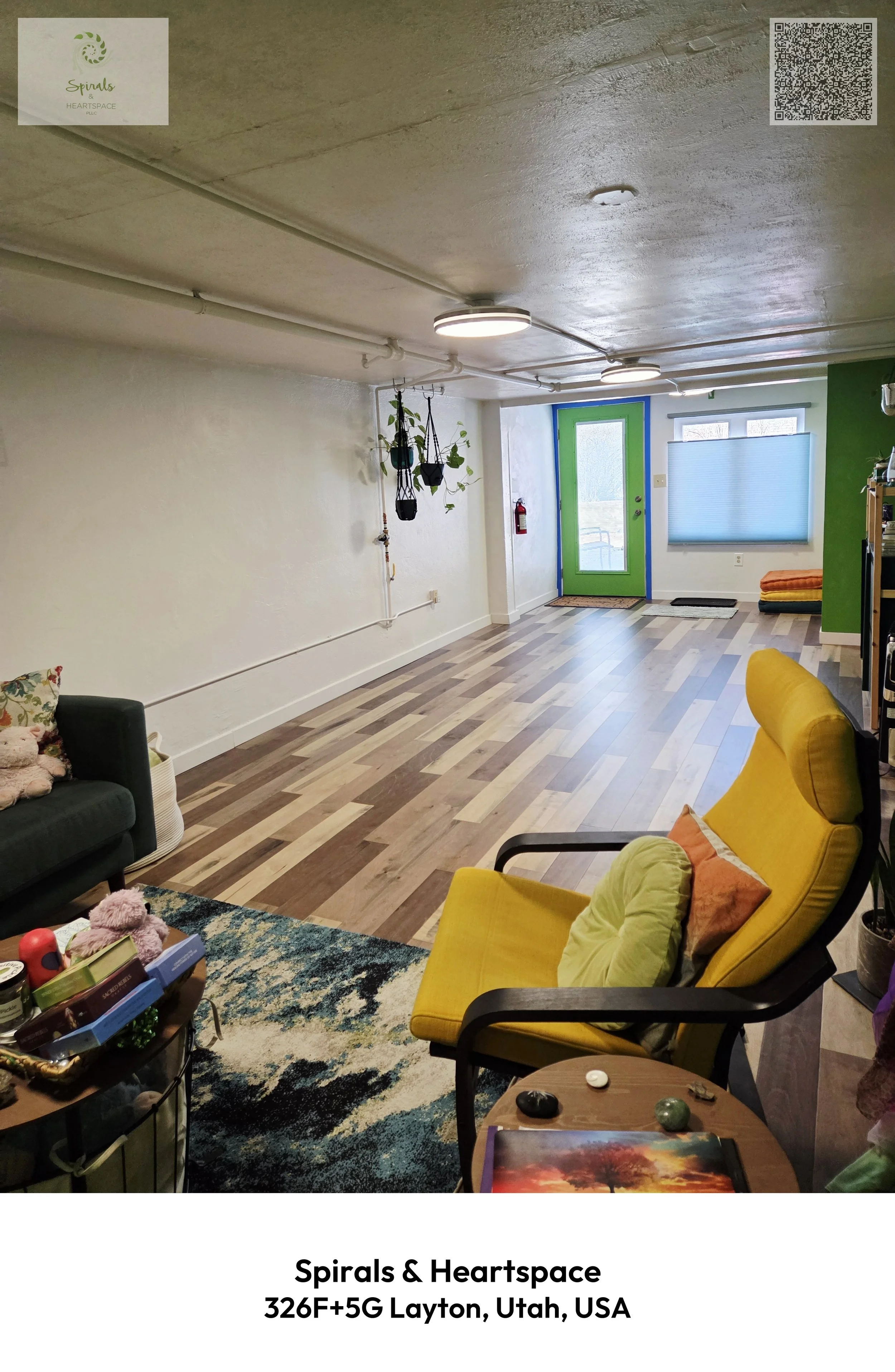
Spirals & Heartspace
Name: Spirals & HeartspaceAddress: 534 W Gentile St, Layton, UT 84041
Phone: (385) 301-5252
Website: https://spiralsandheartspacehealing.com/
Hours:
Sunday: Closed
Monday: 9:30 AM – 7:00 PM
Tuesday: 9:30 AM – 7:00 PM
Wednesday: 9:30 AM – 7:00 PM
Thursday: 9:30 AM – 7:00 PM
Friday: 9:30 AM – 7:00 PM
Saturday: Closed
Open-location code / plus code: 326F+5G Layton, Utah, USA
Coordinates: 41.0604503, -111.9762128
Map/listing URL: https://www.google.com/maps/place/Spirals+%26+Heartspace/@41.0604503,-111.9762128,766m/data=!3m2!1e3!4b1!4m6!3m5!1s0x875303311f1d4d1b:0xc6859e5e3fceafe2!8m2!3d41.0604503!4d-111.9762128!16s%2Fg%2F11x781dbvb
Embed iframe:
Socials:
Instagram: https://www.instagram.com/spiralsheartspace/
LinkedIn: https://www.linkedin.com/company/spirals-and-heartspace-pllc
TikTok: https://www.tiktok.com/@spiralsheartspace
X: https://x.com/SpiralsHea61786
YouTube: https://www.youtube.com/@SpiralsHeartspace
The practice is led by Ande Welling, a licensed clinical mental health counselor with training in dance/movement therapy, somatic work, EMDR, trauma care, relational neuroscience, and embodied attachment.
Listed services include therapy, coaching, consultation, authentic movement, trauma therapy, somatic therapy, grief counseling, movement therapy, and attachment therapy.
The practice serves adults who want a deeper body-aware approach to trauma, anxiety, depression, grief, burnout, self-abandonment, family patterns, and relationship wounds.
Spirals & Heartspace offers both in-person sessions in Layton and online therapy for clients in Utah.
The practice is locally positioned for clients in Layton, Kaysville, Farmington, Syracuse, Clearfield, Clinton, Roy, Ogden, Bountiful, Davis County, and nearby northern Utah communities.
The office is listed at 534 W Gentile St in Layton, with public listing hours Monday through Friday from 9:30 AM to 7:00 PM.
Prospective clients can call (385) 301-5252 or visit https://spiralsandheartspacehealing.com/ to ask about consultation options, session fit, and scheduling.
The public map listing for Spirals & Heartspace can help clients verify the Gentile Street office before planning an in-person appointment.
Popular Questions About Spirals & Heartspace
What is Spirals & Heartspace?
Spirals & Heartspace is a Layton, Utah psychotherapy and coaching practice offering somatic, trauma-focused, expressive arts, movement-based, and attachment-informed support for adults.
Who is the therapist at Spirals & Heartspace?
The official site identifies Ande Welling as the therapist, coach, movement facilitator, and guide behind Spirals & Heartspace. Listed credentials include LCMHC, BC-DMT, NCC, GL-CMA, BSE, EMDR Trained, and CCTP-II.
Where is Spirals & Heartspace located?
The matching public listing and LinkedIn profile list the address as 534 W Gentile St, Layton, UT 84041.
Does Spirals & Heartspace offer online therapy?
Yes. The official FAQ states that therapy is available in person or through a HIPAA-compliant telehealth platform for clients who live in Utah.
What services does Spirals & Heartspace provide?
Listed services include therapy, coaching, consultation, authentic movement, trauma therapy, somatic therapy, grief counseling, movement therapy, and attachment therapy.
What makes somatic therapy different from traditional talk therapy?
The official Layton page explains that somatic therapy works with body sensations, movement, and physical experience because trauma and emotional patterns can be held in the nervous system, not only in thoughts.
Do clients need dance experience for movement therapy?
No. The official Layton FAQ says no dance training or special physical ability is required, and that movement therapy uses a client’s natural capacity for movement to access emotions and process experiences.
Does Spirals & Heartspace accept insurance?
The official FAQ says the practice does not take insurance directly, but may provide superbills or bill for out-of-network benefits when applicable. Clients should confirm current reimbursement options directly before scheduling.
What are Spirals & Heartspace’s listed hours?
The matching public listing shows Monday through Friday from 9:30 AM to 7:00 PM, with Saturday and Sunday closed. Appointment availability should be confirmed directly.
How can I contact Spirals & Heartspace?
Call (385) 301-5252, visit https://spiralsandheartspacehealing.com/, or use the listed social profiles: https://www.instagram.com/spiralsheartspace/, https://www.linkedin.com/company/spirals-and-heartspace-pllc, https://www.tiktok.com/@spiralsheartspace, https://x.com/SpiralsHea61786, and https://www.youtube.com/@SpiralsHeartspace.
Landmarks Near Layton, UT
Spirals & Heartspace is located on West Gentile Street in Layton, Utah, with in-person therapy available locally and online therapy available for Utah residents. Clients near these landmarks can call (385) 301-5252 or visit https://spiralsandheartspacehealing.com/ to ask about somatic therapy, trauma therapy, movement therapy, grief counseling, attachment therapy, and consultation options.
- 534 W Gentile St — The listed office address for Spirals & Heartspace; clients can use the map listing to verify the office before visiting.
- West Gentile Street — The local street connected with the practice’s Layton office location.
- Downtown Layton — A practical local reference point for clients navigating central Layton.
- Layton Hills Mall — A major Layton shopping landmark and useful orientation point for clients traveling through the city.
- Interstate 15 near Layton — A major northern Utah route that helps clients reach Layton from nearby Davis County communities.
- Layton FrontRunner Station — A transit landmark for clients traveling by commuter rail through Davis County.
- Ellison Park — A local park and community landmark in Layton.
- Great Salt Lake Shorelands Preserve — A major natural landmark west of Layton and a recognizable Davis County destination.
- Hill Air Force Base — A major regional landmark near Layton and Clearfield.
- Kaysville — A nearby Davis County city listed in the practice’s surrounding service area.
- Farmington — A nearby Davis County community included in the broader local service-area language.
- Ogden — A nearby northern Utah city; clients can ask whether online Utah therapy or in-person Layton sessions are the best fit.