A few winters ago a client described how she brewed tea at sunset in the mug her father had used for decades. She set the mug on the windowsill, touched the handle, and stood quietly for three breaths. No speeches, no candles, no audience. In her words, it returned her to a conversation she had not finished. She did it most evenings for three months, then only on Sundays. The muscles in her jaw softened. Sleep, which had felt like an enemy, began to arrive again. When she later joined her siblings to scatter their father’s ashes, she felt steadier. The ritual did not erase the ache. It gave the ache a room.
Meaning-making after loss rarely happens on command. It is more often an accrual of moments, guided attention, and the felt presence of others who can witness what hurts. In grief counseling, we work with memories, with attachment, and with the body’s responses to absence. Rituals help turn raw experience into something the nervous system can hold. They also thread the old life to the new so that bonds change form rather than vanish.
Why meaning becomes the central task
Grief disrupts prediction. The brain, habituated to patterns, suddenly confronts an absence where it expects a presence. Doors open to no one. The phone stays silent. Automatic routines stumble. This mismatch creates distress that is cognitive, emotional, and physical. People report dizziness in the grocery aisle, a sense that time has bent, or a sudden surge of anger when a song plays in a waiting room.
Meaning-making does not mean spinning positives or finding silver linings. It is the practical work of placing what happened into a story that can be revisited without shattering. Trauma therapy research shows that overwhelming events overload our capacity to integrate memory. Sensory fragments, body jolts, and intrusive images recur because they have not been stitched into a sequence the person can tolerate. Grief counseling borrows from this understanding, not to pathologize sorrow, but to offer ways of metabolizing it.
Relationships also provide the scaffolding for meaning. Attachment therapy points to how early patterns of safety and care shape our later capacity to lean on others. In grief, the person you would have called is often the one who is gone. We replace that immediate reach with deliberate structures, including rituals, that allow connection to continue in a different form. The goal is not detachment. It is a reorganization of attachment.
What grief counseling actually offers
At its best, grief counseling provides conditions where pain can move. The work is simple to state, exacting to practice.
First, we slow down and name what happened without softening or embellishing. Avoiding the facts keeps the nervous system spinning. Naming them too bluntly, without care, can retraumatize. Pacing becomes the craft.
Second, we identify what matters most to the mourner’s story. Not all losses land the same. Deaths that come after long caregiving strain the body in different ways than sudden accidents do. Estranged relationships leave other questions than tightly bonded ones. There are distances layered with guilt, and bonds scented with relief, and every variation in between. Helpful counseling takes that particularity seriously.
Third, we track the body. Somatic therapy is not an add-on here. Breath changes, gut clenching, numbness, and tremors are part of grief’s language. Movement therapy can be as modest as walking while talking, or as structured as a short sequence done at the start of each session to let the body say what the tongue cannot. The body’s shifts often give us the first indicators that meaning is landing.
Fourth, we plan, test, and refine rituals that fit the person’s life. Some rituals are private and quiet. Others are communal and loud. The shape matters less than the intention, the repeatability, and the way they honor the relationship in realistic terms.
Rituals as containers, not prescriptions
Rituals steady people because they offer repetition, sequence, and symbolism. They give hands and voices something to do while the heart catches up. A ritual creates a boundary in time and place. For a few minutes or hours, you are allowed to focus. Then you step out again. Without these containers, grief leaks into every corner. With them, grief concentrates and moves.
There are public rituals: funerals, shivas, wakes, memorials, celebration of life services. There are community observances weeks and months later, where people gather to read names or light lanterns. These matter because they recruit social support, which consistently predicts better long term adjustment.
There are also the quieter rituals most people never see. The mug on the windowsill. A Saturday bench at a park. A letter left under a stone. A song played at the same volume in the same room every week, with the same breath taken just before the chorus. Small rituals are powerful precisely because they are repeatable. The nervous system notices repetition. Over time, the ritual signals safety, and difficult memories can surface without overwhelming.
Rituals are not magic, and they are not moral tests. If a ritual begins to feel like a rule you must obey or a performance to appease others, it may be working against its purpose. Counselors watch for this shift, then help adjust the frame so the person remains free to grieve rather than graded on how they do it.
How to design a personal ritual that fits
Here is a simple checklist people find useful when building a ritual. Keep it short, specific, and yours.
- Choose one anchor: a place, object, or gesture that reliably centers you. Set a time boundary: two minutes, ten minutes, or one hour on a specific day. Decide on one sensory element: scent, sound, touch, or taste that connects to the person. Add a consistent opening and closing: a breath, a phrase, or a brief movement that starts and ends the space. Name the intention in one sentence: to remember, to meet anger safely, to ask for guidance, or to rest.
I often encourage clients to run a two week pilot. Do the ritual as designed, without changing it, and jot a few words afterward. After the pilot, tweak one variable at a time. The goal is not to produce special effects. It is to discover what steadies you and brings the relationship into present time without tearing you apart.
The body as an altar
When words run out, the body still speaks. Somatic therapy offers tools that honor this truth. Grounding through the soles of the feet while naming three details in the room can interrupt a collapse into numbness. Focusing on the out-breath for a count that is slightly longer than the in-breath can ease a tight chest. Placing a warm pack over the sternum for ten minutes before bed may coax a nervous system into softer sleep. These are not cures. They are handles you can grab when the swell rises.


Movement therapy widens the options. One client created a four minute sequence to be done every morning after her partner’s sudden death. Step forward and bow the head, step back and lift the arms, press the palms together, turn in place once, touch the heart, touch the doorframe, step outside. Over three weeks, she reported that the moments of panic upon waking dropped from daily to twice a week. Another client, wrung out by months of anticipatory grief, found a simple sway with music in the kitchen let her cry without tipping into breathless sobbing. These micro-practices give sorrow a route through the tissues.
If the loss includes medical trauma or violent imagery, we work more carefully. Flashbacks can spike with certain movements or body positions. Trauma therapy principles apply: titration, pendulation, and consent. We do small doses and return to neutral. We name what emerges. We avoid sudden exposure to triggering material. There is nothing heroic about overriding the body’s limits. Effective ritual honors both longing and safety.
When grief and trauma collide
Many losses are clean in the sense that the cause is known, the last days were loving, and the goodbye, while painful, was possible. Others come jagged. Suicide leaves a field of questions that cannot be answered. Homicide brings the criminal legal system into the kitchen. Disasters fold strangers and headlines into private life. Medical events can include alarms, bright lights, and time pressure that imprint themselves on the nervous system.
In these cases, grief counseling and trauma therapy interlock. We plan for sensory triggers. We anticipate the sightlines of courtrooms and the sounds of hospital monitors in shows and advertisements. We build rituals that acknowledge the event without reenacting it. Sometimes that looks like a candle by a photo, and sometimes it looks like a letter written and then sealed in a box on the same shelf as the discharge summary, so that papers that once towered over the day become objects you can reach for or leave alone.
Ambiguous loss adds another layer. When someone is alive but not psychologically present due to dementia, addiction, or estrangement, rituals help reality sit beside love without forcing a choice between them. You might light a candle for the person as they were, and place a stone for the person as they are. Both remain on the table. The ritual respects the split the psyche must hold.
Attachment threads that continue
A common fear is that ritual means holding on too tightly. In practice, ritual often dissolves stuckness. Attachment therapy reframes the task as continuing bonds. You are not erasing a person. You are shifting the way you relate. Transitional objects help. One client wore his mother’s scarf at family gatherings for a year. Another kept her wife’s keys on a hook by the door, and touched them when she left the house until the day she realized she no longer needed the gesture. The bond did not disappear. It changed address.
Grief counseling also pays attention to protest and despair, the twin poles of attachment distress. Rituals can give protest a place to shout and despair a place to lie down. Scheduling time to rage in the car, or to sit on the floor among photo albums, signals to the rest of the week that there will be times to function and times to fall apart. People often fear that if they start crying, they will never stop. The nervous system, when trusted with boundaries, shows that it can rise and settle.
Family and group rituals that work in real homes
Grand plans often fail because they demand energy grief has already spent. Better to start ordinary. A family I worked with chose Sunday soup as their memorial practice after their grandmother died. The grandkids stirred. People told one story before bowls were filled. Phones stayed off for the first half hour. That was it. The ritual lasted because it fit the family’s actual life.
Another family placed a photo on the bookshelf and slipped hand written notes behind it. When a nephew left for college, he took a copy of one note with him. Shared rituals create a lattice where individual griefs can rest. Not everyone needs the same portion. The point is a pattern that repeats, that belongs to the family, and that does not require permission from anyone outside it.
Cultural and religious traditions already offer rich frameworks. When used with intention, they call in ancestors, neighbors, and the wisdom of generations. When they do not fit, people can thank them and build something else. Grief counseling makes room for both fidelity and freedom.
Calendars, anniversaries, and the ambush of ordinary days
Anniversaries matter. So do weather patterns, sports seasons, and graduation months. I ask clients to map a year and circle five dates that will likely stir things. We plan for those days. That might mean booking time off work, asking a friend to check in, preparing a meal that comforts, or doing the opposite and changing the routine completely.
What catches people off guard are the ambushes. The smell of a neighbor’s laundry detergent that matches your father’s. The lift of a certain laugh across a restaurant. There is no prevention https://johnnyxxnf096.iamarrows.com/trauma-therapy-in-telehealth-what-to-expect-online strategy for these. There is only the practice of letting a wave pass and placing a hand, literally or metaphorically, on the ritual you have built. Even a three breath pause in a bathroom stall can serve as a portable sanctuary.
Children and adolescents, grief in motion
Kids grieve in movement and play. They circle back to questions adults think they have answered. They test whether the world remains safe by pushing boundaries and asking for snacks. Rituals for children work best when they are concrete, short, and repeatable. A bedtime story that includes one memory. A jar of smooth stones, each representing a favorite moment. A weekly draw-and-tell at the kitchen table.
Adolescents often prefer agency. Invite, do not force. Offer materials and time rather than scripts. I have seen teens build playlists as memorials, tag certain songs with dates, and play them on a hike. Others wear a bracelet or jacket for a semester. Movement therapy helps here, too. A half court game with a parent plus five minutes sitting on the bleachers to name the week’s hardest moment can accomplish what a long talk at the dining table cannot.
Faith, culture, and the ethics of borrowing
Rituals live inside traditions. If you were raised within a faith, consider reentering the parts that still carry meaning, even if your relationship to the institution has changed. Light a yahrzeit candle, say Kaddish, bring food to a wake, place a bowl of water and flowers at a home altar. The practice is the point, not your theological certainty.
If you were not raised in a tradition, avoid cherry picking sacred elements from communities you do not belong to. There are countless ways to build rituals without crossing those lines. A photograph, a letter, a walk at dawn, a stone in the pocket, a song sung softly outdoors. Simple acts, repeated with care, accumulate power.
Vignettes from practice
A man in his sixties lost his brother to a stroke. They had fished together every spring since they were kids. He could not face the river without shaking. Over two sessions, we designed a ritual at home. He tied a new fly every Sunday night for a month, even though he had no plan to fish. He listened to a recording of water for five minutes. He wrote his brother’s name on a card and placed it under the vise. By the third week, his hands steadied. When he returned to the river, he went with a friend and stayed for only one hour. The ritual had rehearsed his nervous system for reentry.
A mother in her forties lost a pregnancy at 19 weeks. She wanted to mark the life but feared pity. In counseling, she created a private ritual tied to movement. On the date each month she would have been further along, she walked the local track for 19 minutes, one minute per week carried. She named a hope at the start and a gratitude at the end. After six months, she chose to stop. The ritual had done its work.
A woman in her seventies cared for her wife through two years of illness. After the funeral, she could not enter the bedroom without her throat closing. Somatic work came first. Standing in the doorway, feeling the floor, naming five colors in the room. Then one object each day returned to its place with deliberate touch and a whispered thank you. After a week, she could lie on the bed for ten minutes with a hand on her heart and a hand on the quilt. The body relearned safety one square inch at a time.
An adult child estranged from his father struggled after the father died. Relief, anger, and grief tangled. He built a ritual that acknowledged all three. He placed three small bowls on a shelf. One for the childhood he got, one for the father he wished for, one for the man he had become without that father’s help. Once a week he moved a pebble into each bowl. The act allowed multiple truths to stand without negotiation.
What to watch for and when to get more help
Not all sorrow resolves with time and ritual. Some patterns signal the need for more structured support.
- Persistent inability to function in basic tasks like hygiene, nutrition, or paying bills for several weeks. Intrusive images or panic that do not ease with grounding, or that lead to dangerous avoidance like substance misuse. Debilitating guilt or self blame tied to distorted beliefs about responsibility for the death. Ongoing detachment from all relationships or an inability to feel anything but numbness. Thoughts of self harm, a desire to die to be with the person, or plans to end your life.
Grief counselors can collaborate with physicians and psychiatrists if sleep is absent for weeks, if appetite has collapsed, or if symptoms suggest major depression or post traumatic stress. Medication can build a bridge for the body while therapy builds meaning. There is no virtue in white knuckling when help exists.
How therapists can hold ritual space well
A few practical notes from the clinician’s side. Ask permission before introducing any symbolic act. Explain what will happen, how long it will take, and what choices the client has if distress spikes. Keep materials simple and neutral. Stones, paper, water, a candle if it is safe and culturally appropriate. Avoid scented items unless specifically requested, since smells can trigger strong reactions.
In groups, set clear frames. Who speaks first, how long each person has, what words are off limits. Build in an ending practice that brings people back to the present, such as naming one supportive detail in the room or placing both feet on the floor for three breaths. Online, rituals still work. I have guided clients through letter readings, memory mapping, and synchronized movements over video, with care taken to ensure privacy and to offer an opt out phrase they can use at any time.
Document the ritual plan just like you would a treatment plan. Note the intention, the sequence, the duration, and the review date. That structure communicates that rituals are not sentimental extras. They are core interventions for meaning-making.
Measuring change without turning grief into a project
Grief is not a performance, and there is no prize for speed. Still, tracking can help. I often ask about the range of feelings accessible in a week. Has anger shifted from 9 of 10 to 6 of 10 at its peak, with more moments of tenderness or curiosity appearing? Are intrusive images less sticky, coming three times a day instead of ten? Is sleep arriving five nights out of seven rather than two? Can you tell one more story about the person without losing your voice?
Body signals often change first. Shoulders lower. The breath finds its way down into the belly. Jaw clenching eases. People report that errands no longer feel like hostile terrain. The ritual becomes less of a lifeline and more of a companion. Some rituals fade. Others become annual observances that bring sweetness alongside ache. Either is a sign that meaning has taken root.
A note on permission
Grief unthreads life and weaves it again in a pattern no one else can design. Counseling offers company and good tools. Rituals offer rhythm and a place to set your hands when the ground moves. You do not need to earn either. If you find a small act that steadies you, it counts. If a tradition still fits your body, use it. If it does not, build something gentler. Movement, breath, memory, words, quiet, community, solitude, faith, doubt, all of them can sit at the same table. The measure is not what it looks like from the outside. The measure is whether you can carry the love and the loss in a way that lets you keep living.
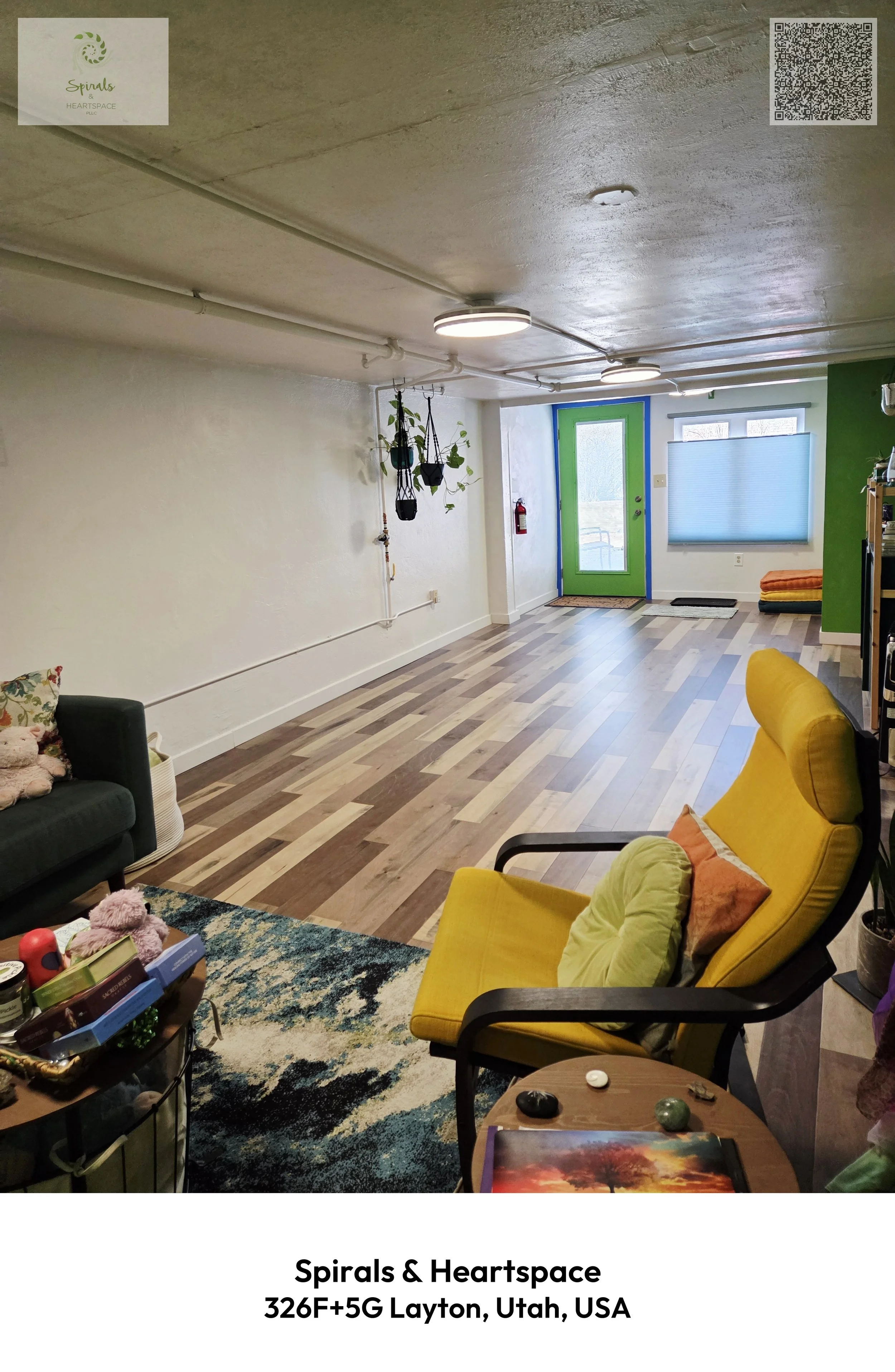
Spirals & Heartspace
Name: Spirals & HeartspaceAddress: 534 W Gentile St, Layton, UT 84041
Phone: (385) 301-5252
Website: https://spiralsandheartspacehealing.com/
Hours:
Sunday: Closed
Monday: 9:30 AM – 7:00 PM
Tuesday: 9:30 AM – 7:00 PM
Wednesday: 9:30 AM – 7:00 PM
Thursday: 9:30 AM – 7:00 PM
Friday: 9:30 AM – 7:00 PM
Saturday: Closed
Open-location code / plus code: 326F+5G Layton, Utah, USA
Coordinates: 41.0604503, -111.9762128
Map/listing URL: https://www.google.com/maps/place/Spirals+%26+Heartspace/@41.0604503,-111.9762128,766m/data=!3m2!1e3!4b1!4m6!3m5!1s0x875303311f1d4d1b:0xc6859e5e3fceafe2!8m2!3d41.0604503!4d-111.9762128!16s%2Fg%2F11x781dbvb
Embed iframe:
Socials:
Instagram: https://www.instagram.com/spiralsheartspace/
LinkedIn: https://www.linkedin.com/company/spirals-and-heartspace-pllc
TikTok: https://www.tiktok.com/@spiralsheartspace
X: https://x.com/SpiralsHea61786
YouTube: https://www.youtube.com/@SpiralsHeartspace
The practice is led by Ande Welling, a licensed clinical mental health counselor with training in dance/movement therapy, somatic work, EMDR, trauma care, relational neuroscience, and embodied attachment.
Listed services include therapy, coaching, consultation, authentic movement, trauma therapy, somatic therapy, grief counseling, movement therapy, and attachment therapy.
The practice serves adults who want a deeper body-aware approach to trauma, anxiety, depression, grief, burnout, self-abandonment, family patterns, and relationship wounds.
Spirals & Heartspace offers both in-person sessions in Layton and online therapy for clients in Utah.
The practice is locally positioned for clients in Layton, Kaysville, Farmington, Syracuse, Clearfield, Clinton, Roy, Ogden, Bountiful, Davis County, and nearby northern Utah communities.
The office is listed at 534 W Gentile St in Layton, with public listing hours Monday through Friday from 9:30 AM to 7:00 PM.
Prospective clients can call (385) 301-5252 or visit https://spiralsandheartspacehealing.com/ to ask about consultation options, session fit, and scheduling.
The public map listing for Spirals & Heartspace can help clients verify the Gentile Street office before planning an in-person appointment.
Popular Questions About Spirals & Heartspace
What is Spirals & Heartspace?
Spirals & Heartspace is a Layton, Utah psychotherapy and coaching practice offering somatic, trauma-focused, expressive arts, movement-based, and attachment-informed support for adults.
Who is the therapist at Spirals & Heartspace?
The official site identifies Ande Welling as the therapist, coach, movement facilitator, and guide behind Spirals & Heartspace. Listed credentials include LCMHC, BC-DMT, NCC, GL-CMA, BSE, EMDR Trained, and CCTP-II.
Where is Spirals & Heartspace located?
The matching public listing and LinkedIn profile list the address as 534 W Gentile St, Layton, UT 84041.
Does Spirals & Heartspace offer online therapy?
Yes. The official FAQ states that therapy is available in person or through a HIPAA-compliant telehealth platform for clients who live in Utah.
What services does Spirals & Heartspace provide?
Listed services include therapy, coaching, consultation, authentic movement, trauma therapy, somatic therapy, grief counseling, movement therapy, and attachment therapy.
What makes somatic therapy different from traditional talk therapy?
The official Layton page explains that somatic therapy works with body sensations, movement, and physical experience because trauma and emotional patterns can be held in the nervous system, not only in thoughts.
Do clients need dance experience for movement therapy?
No. The official Layton FAQ says no dance training or special physical ability is required, and that movement therapy uses a client’s natural capacity for movement to access emotions and process experiences.
Does Spirals & Heartspace accept insurance?
The official FAQ says the practice does not take insurance directly, but may provide superbills or bill for out-of-network benefits when applicable. Clients should confirm current reimbursement options directly before scheduling.
What are Spirals & Heartspace’s listed hours?
The matching public listing shows Monday through Friday from 9:30 AM to 7:00 PM, with Saturday and Sunday closed. Appointment availability should be confirmed directly.
How can I contact Spirals & Heartspace?
Call (385) 301-5252, visit https://spiralsandheartspacehealing.com/, or use the listed social profiles: https://www.instagram.com/spiralsheartspace/, https://www.linkedin.com/company/spirals-and-heartspace-pllc, https://www.tiktok.com/@spiralsheartspace, https://x.com/SpiralsHea61786, and https://www.youtube.com/@SpiralsHeartspace.
Landmarks Near Layton, UT
Spirals & Heartspace is located on West Gentile Street in Layton, Utah, with in-person therapy available locally and online therapy available for Utah residents. Clients near these landmarks can call (385) 301-5252 or visit https://spiralsandheartspacehealing.com/ to ask about somatic therapy, trauma therapy, movement therapy, grief counseling, attachment therapy, and consultation options.
- 534 W Gentile St — The listed office address for Spirals & Heartspace; clients can use the map listing to verify the office before visiting.
- West Gentile Street — The local street connected with the practice’s Layton office location.
- Downtown Layton — A practical local reference point for clients navigating central Layton.
- Layton Hills Mall — A major Layton shopping landmark and useful orientation point for clients traveling through the city.
- Interstate 15 near Layton — A major northern Utah route that helps clients reach Layton from nearby Davis County communities.
- Layton FrontRunner Station — A transit landmark for clients traveling by commuter rail through Davis County.
- Ellison Park — A local park and community landmark in Layton.
- Great Salt Lake Shorelands Preserve — A major natural landmark west of Layton and a recognizable Davis County destination.
- Hill Air Force Base — A major regional landmark near Layton and Clearfield.
- Kaysville — A nearby Davis County city listed in the practice’s surrounding service area.
- Farmington — A nearby Davis County community included in the broader local service-area language.
- Ogden — A nearby northern Utah city; clients can ask whether online Utah therapy or in-person Layton sessions are the best fit.