Adolescence brings a tidal shift in how a young person experiences themselves and others. Bodies change, peers matter more, rules bend, and the question of who am I takes center stage. Attachment therapy sits right at that crossroads, where a teen’s hunger for independence rubs against their need for safe connection. When that friction gets loud, it often shows up as irritability, sudden shutdowns, or a revolving door of friendships. Done well, attachment-focused work offers a sturdy relationship that can hold intensity without collapsing, while also giving a teen practical ways to feel themselves, regulate big states, and experiment with new ways of relating.
I have sat with fifteen-year-olds who were angry at everyone and everything by the third minute of the intake, and I have met seventeen-year-olds who never made eye contact the entire first month. Both, in their own grammar, were asking the same question: will you stay with me when I show you how hard this is. Attachment therapy answers by showing up, session after session, in a way that is steady, transparent, and curious rather than corrective. The strategies and modalities shift with the teen’s temperament, culture, neurotype, and history, but the throughline remains constant. The relationship is the intervention, and the techniques are there to support it.
Why attachment becomes volatile in the teen years
Secure attachment in early childhood lays down expectations about caregivers and self. In adolescence, those internal models meet new evidence. A teen pushes back on rules, compares family norms with peers, and sources validation from outside the home. The brain also remodels. Reward https://spiralsandheartspacehealing.com/consultation systems are more active, and the prefrontal cortex that handles planning and impulse braking is still under construction. That combination can make everyday disappointments hit like betrayals.
Teens with a secure base generally weather these shifts with friction but not fracture. Teens who grew up with inconsistent caregiving, high conflict, medical trauma, racism, or migration stress may have learned that closeness is unsafe or unreliable. They often bounce between clinging and rejecting, or they go cool and self-sufficient to avoid disappointment. Trauma therapy adds vital context here, but the goal is not to relabel a teen as disordered. The goal is to understand which attachment strategies helped them survive and how those same strategies might now be getting in the way of friendships, school, or sleep.
What attachment work looks like in the therapy room
The first month is often about pacing. We do a careful intake, but a teenager is not a file. I listen for moments when their body amps up or collapses. Does the jaw clench when talking about a coach. Do they crack jokes when discussing a breakup, or do they go monotone and distant. These are not random tics; they are the body’s solution to threat. Somatic therapy fits naturally into attachment work because teens understand quickly when you ask, where do you feel that in your body, instead of why do you do that. When a teen learns to track a fluttering chest or tingling hands, they gain a lever to downshift without needing a lecture.
Sessions usually run 50 to 55 minutes, once per week, with periods of twice-weekly appointments during crises. Across 12 to 24 sessions, we map patterns of approach and withdrawal with curiosity, not blame. The cadence is gentle exposure to closeness, disappointment, and repair. If I am a minute late to greet them in the waiting room, we talk about what their body did in that gap. If they text cancel fifteen minutes before session, we address the pull to escape and we also ask what felt too much.
A common fear among parents is that talking about attachment will heap blame on caregivers. In well-delivered attachment therapy, parents are partners, not defendants. We hold the idea that context matters, and that context includes adult nervous systems under pressure. Many families navigate stacked stressors, from shift work and financial strain to grief after a death in the family. Grief counseling belongs in the attachment frame when loss has shaped the family’s emotional climate. Teens frequently carry unspoken roles after a loss, like being the strong one, or they internalize a belief that sadness breaks the people they love. Naming this, and showing how grief moves in waves rather than tasks, releases them from jobs they were never meant to do.
Somatic and movement elements that help teens engage
I learned early not to ask a flooded teen to sit still and talk. For some, stillness feels like a trap. Movement therapy gives their nervous system a way to discharge activation and find rhythm again. A fifteen-year-old lacrosse player who spiraled after a benching improved faster when we processed feelings while doing a simple passing drill in the hallway, counting out loud to sync breath and motion. Another teen, who avoided eye contact, began sessions by sketching album art while we spoke in parallel. The hands busied, the guard dropped.
Somatic therapy is not a bag of tricks; it is a stance. We pay attention to breath, posture, and micro-shifts. We experiment with small actions that bring a body back into a window of tolerance. That might mean a 30-second wall push to engage large muscle groups, or a paced breath pattern like six seconds out, four in, repeated five times. When we pair these practices with attachment themes, the teen learns that regulation and relating are intertwined. They can feel anger without either exploding or fawning. They can hold eye contact for two sentences and then look away without shame.

Identity, belonging, and the attachment lens
A teen’s identity is a mosaic built from family stories, cultural background, language, faith, gender, and the neighborhoods they move through. Belonging asks, where can I bring my full self and still be welcome. Teens who navigate marginalization, whether due to race, disability, immigration status, or LGBTQ+ identities, often carry an extra layer of vigilance. The therapy relationship needs to show that it can hold their whole self without asking them to translate everything for the adult in the room.
I remember a client who was the only Black student in advanced classes and the only student athlete in an arts-focused friend group. He said, I am never the right kind of anything. We made explicit space to notice the ache of fitting nowhere perfectly and to mark moments he did feel resonance, like pickup games at the park or late-night studio hours where work, sweat, and beats coexisted. Attachment therapy, in this context, was less about fixing a pattern and more about building pathways to real communities that matched multiple parts of him.
Social media complicates belonging by offering constant comparison and rapid, sometimes cruel feedback loops. A teen might post for connection and then spend hours spiraling over likes. We do not demonize the platforms. We explore what each app feeds or starves in their attachment system. Some teens benefit from clear limits and scheduled fasts; others learn to curate who they follow and how they engage so their feed supports rather than injures. The guiding question stays the same: does this help you feel connected to real people who know you, or does it make you chase approval that evaporates by morning.
Integrating trauma therapy without overwhelming the system
When trauma is in the picture, pacing is everything. Exposure-based methods, EMDR, or narrative approaches can be effective, but they must sit on a foundation of felt safety in the present relationship. Teens often present with complex, layered histories: medical procedures in childhood, a parent’s addiction, community violence, or abrupt moves across countries. The order of operations matters: stabilize daily routines, expand regulation skills, then inch toward the hardest memories with robust support.
I sometimes use what I call the three-lane map. Lane one is now: sleep, appetite, school, friends. Lane two is body: signs of upshift or collapse and tools that work. Lane three is story: the memories that light up the alarm. We keep traffic moving in lanes one and two as we briefly visit lane three. If lane three hijacks the session, we steer back, grounding through sensation, simple movement, or orienting the eyes to the room. We go home with the nervous system steadier than it arrived. A teen who leaves therapy wrung out each week is less likely to return.
Family roles and real repair
Attachment therapy with teens is only as strong as the bridges we build to caregivers. Family meetings vary in frequency. With some families, we meet every third session. With others, we do a longer parent-only consult once a month. The goal is shared language about what helps and what escalates. We trade rules for rituals. A nightly five-minute check-in on the teen’s terms can cut through nagging and avoidance more than a dozen lectures.
Parents often ask for scripts. I offer principles. Be brief. Name what you see without a verdict. Ask if they want help or company. And when rupture happens, repair quickly. I have watched relationships turn when a parent said, I pushed too hard last night. You did not deserve the tone I used. That statement, delivered within 24 hours, matters more than a perfect consequence chart. Teens study us for accountability and generosity. They copy what they see.
Grief that hides in plain sight
Not all grief arrives after a funeral. Teens grieve the parent who moved out, the team they did not make, the friend group that shattered after a rumor. Ambiguous grief also hides in immigration stories, when a family leaves home for safety or opportunity but loses language, elders, or foodways. Grief counseling inside attachment therapy validates these losses without asking the teen to take care of the adults. We mark anniversaries. We let them decide if they want a ritual, like visiting a place or cooking a dish their grandparent loved. We do not force meaning. We let meaning earn its place over time.
One sixteen-year-old refused to talk about her brother’s overdose for months. She rolled her eyes at every attempt to label feelings. What opened things was ten quiet minutes listening to his old playlist at the start of session, song by song. By track four, she said, he loved this one when he finally made varsity. That small remembering cracked the door far better than any grief worksheet could.
A realistic arc of treatment
When families ask how long this takes, I give ranges and watch for reactions. Short-term attachment-informed work can stabilize a teen in 8 to 12 sessions, especially when a recent stressor tipped the balance. More entrenched patterns tied to trauma or chronic stress often need six months or longer, with periodic intensifications. We establish checkpoints every four to six sessions. We ask what feels different in their body, in their mornings, on their phone, with their coach. Change rarely travels in a straight line. We plan for dips after a good stretch and do not catastrophize them.
Here is a simple map I often share to set expectations.
- Early phase: build safety, map patterns, teach basic regulation skills, adjust routines that sabotage sleep or stability. Middle phase: increase tolerance for closeness and frustration, practice new relational moves at home and with peers, integrate trauma therapy elements at the pace the body can hold. Consolidation: test skills under pressure, deepen trust that repair is possible, widen real-world belonging through clubs, teams, faith spaces, or jobs. Transition: space sessions further apart, create a relapse plan, mark gains with a concrete ritual that the teen designs. Follow-up: brief booster sessions at 1, 3, or 6 months as needed, targeted consults during predictable stressors like college apps or season tryouts.
What progress actually looks like
Families often look for serenity. I warn them that progress first looks messier, not calmer. A teen who never spoke might start snapping because they feel safe enough to protest. A teen who fawned their way through conflict may begin to say no. That is growth. We watch for specific markers instead. Morning routines that used to take 90 minutes now take 50. Panic spikes that lasted an hour now fall in 15. A friend conflict that would have detonated a week of school refusal resolves in a day. These are not theoretical wins; they mean fewer absences, steadier grades, and more nights where the home feels breathable.
I keep a whiteboard notebook where we track three numbers at the start of each session: stress from 0 to 10, body battery from 0 to 10, closeness tolerance from 0 to 10. It turns subjective impressions into a visible trend. Teens like data when it respects their experience. If they report a body battery of 3 for three weeks, we intervene at the level of sleep, nutrition, and movement before attempting deeper relational challenges. You do not ask a low battery to power heavy software.
Edge cases, trade-offs, and judgment calls
Some teens do not click with a therapist who resembles a parent figure. Others bristle at structure but flounder without it. There is no perfect matching algorithm. What matters most is the therapist’s capacity to tolerate intensity without retaliating, to apologize when they miss, and to customize techniques without abandoning the core frame. I have referred out when my style did not fit, and I have adjusted session formats to include walking meetings for those who think better in motion.
Another trade-off lives in privacy. Parents deserve to know if safety is at risk. Teens deserve a zone where missteps do not trigger surveillance. I use clear agreements, written in simple language, about what stays in the room and what must be shared. We also practice how a teen can tell a parent something hard in my presence so I am not a secret vault but a bridge.
School coordination is a judgment call, too. Some teens benefit from a 504 plan that adjusts workload during acute periods. Others prefer to work quietly without labels. I ask the teen which support would lower friction most. We revisit the choice after a grading period. What matters is that the teen experiences control and partnership, not a plan imposed on them.
Attachment therapy intersects with medication questions. If sleep is wrecked by anxious rumination, a short-term sleep aid can prevent a downward spiral while we build skills. If depression shuts down appetite and movement, an SSRI may raise the floor enough for therapy to take. I am cautious with teens who use substances to regulate; medication without addressing use often yields muddy results. Collaboration with a prescriber who respects the therapy frame is crucial.
When therapy is not enough
There are times when outpatient sessions cannot hold the risk. Persistent suicidal intent, recent serious self-harm, psychosis, or eating disorder behaviors that compromise medical stability require a higher level of care. I do not drag a teen there with scare tactics. I show them the criteria. I say, your system is doing everything it can to cope. We need a container that can provide round-the-clock safety while we reset. We plan the step up and the step back down from the start, so they do not feel exiled.
Safety planning is a living document, not a one-time handout. We identify triggers, early warning signs, and specific actions the teen can take within 5 minutes, not vague slogans. We remove means when indicated and we rehearse how to reach help after hours. The presence of a plan does not mean failure. It reflects respect for real risk and for the teen’s life.
Practical session vignettes
A fourteen-year-old with frequent school avoidance arrived sullen, hoodie up, hands in sleeves. I did not ask for eye contact. We sat side by side and built a schedule for the rest of the day that included a 10-minute win in the first hour at school. He chose to deliver a library book, not attend math. The next day, he delivered the book and stayed for homeroom. Two weeks later, he was making it to three periods most days. Attachment work there was permission to titrate exposure with a partner who did not roll their eyes when he faltered.

A sixteen-year-old with explosive arguments at home tracked her body signs. We learned that her fists clenched five minutes before she started shouting. The intervention was a three-step protocol: walk to the sink, run cold water over wrists for 30 seconds, text a neutral emoji to her mother to indicate a pause, then decide whether to talk or take a 15-minute break. Within a month, fights dropped from daily to twice weekly, and some ended with laughter because they caught the cycle in time. The attachment repair came from both sides practicing a pause that did not equal abandonment.
A seventeen-year-old grieving a grandfather sat on the floor, back against the couch, and said, I hate that everyone wants me to say I am fine. We built a respair ritual, a brief daily act to breathe life back into a space shaped by loss. He chose to boil tea each night and write one sentence he wished he could tell his grandfather. He kept the slips in a shoebox. Over time, those sentences moved from pain to gratitude to a plan for his first job application, because the man he missed had taught him to show up on time. Grief counseling, inside the attachment frame, created continuity with the past and a bridge to action.
How caregivers can support attachment work at home
- Practice one small daily ritual the teen controls, like a three-sentence check-in after dinner, sitting side by side rather than face to face. Use brief observations instead of cross-examinations, such as you seem quiet since practice, I am around if you want company. Offer choices within boundaries, like homework before or after dinner, rides at 7 or 7:30, both of which keep structure without power struggles. Repair quickly after conflict with a specific statement, for example, I interrupted you twice, and I am working on it. Can we try again at 8. Protect sleep like a medical appointment, anchoring wake time within a 30-minute window even on weekends.
These moves are not magic. They are mundane, which is their strength. Predictable, low-drama gestures build trust more reliably than big speeches.
Measuring what we can, honoring what we cannot
Attachment security is not a blood test. Still, we can track proxies. Attendance, grades, and coach or teacher feedback offer one lens. Self-report scales, like weekly ratings of closeness comfort, give another. Parents can keep a simple log of morning conflict length or the number of family meals that end without someone walking out. We also invite qualitative markers: the teen shows a friend their room for the first time in months, or they ask a parent to come to a game after insisting for a year that it did not matter. These moments signal that belonging feels safer.
At the same time, some metrics will dip when development moves forward. A teen who learns to assert might get a lower conduct grade before landing in a healthier friend group. A student who ditches perfectionism might let a B stand. We do not mistake these shifts for failure if they align with greater vitality and less shame.
Final thoughts for teams around a teen
Attachment therapy depends on collaboration. Coaches, teachers, school counselors, and extended family all set micro-climates where a teen either braces or breathes. When we align messages, progress accelerates. The soccer coach who stops public call-outs and uses a quick shoulder tap instead. The teacher who offers a two-minute hallway reset rather than detention for a late return. The aunt who texts good luck before a test and nothing else. These small acts cue safety.
The work asks patience. It also asks strategic boldness, because practicing new ways of relating requires live reps. We do not wait for the teen to feel ready, we scaffold enough safety for them to try. Over months, the therapy room becomes a workshop where identity takes shape through choices, not just talk. Belonging stops feeling like a prize you earn and starts feeling like a place you help build.
Attachment therapy for teens is not soft. It is precise, body-informed, trauma-aware, and pragmatic. It borrows from somatic therapy, grief counseling, and movement therapy to meet a young person where they live, in a body that surges, in a world that judges, in a family that is doing its best. When we hold steady and skillful, teens test, adapt, and, crucially, learn to carry secure connection with them into the classrooms, gyms, studios, jobs, and friendships where their lives unfold.
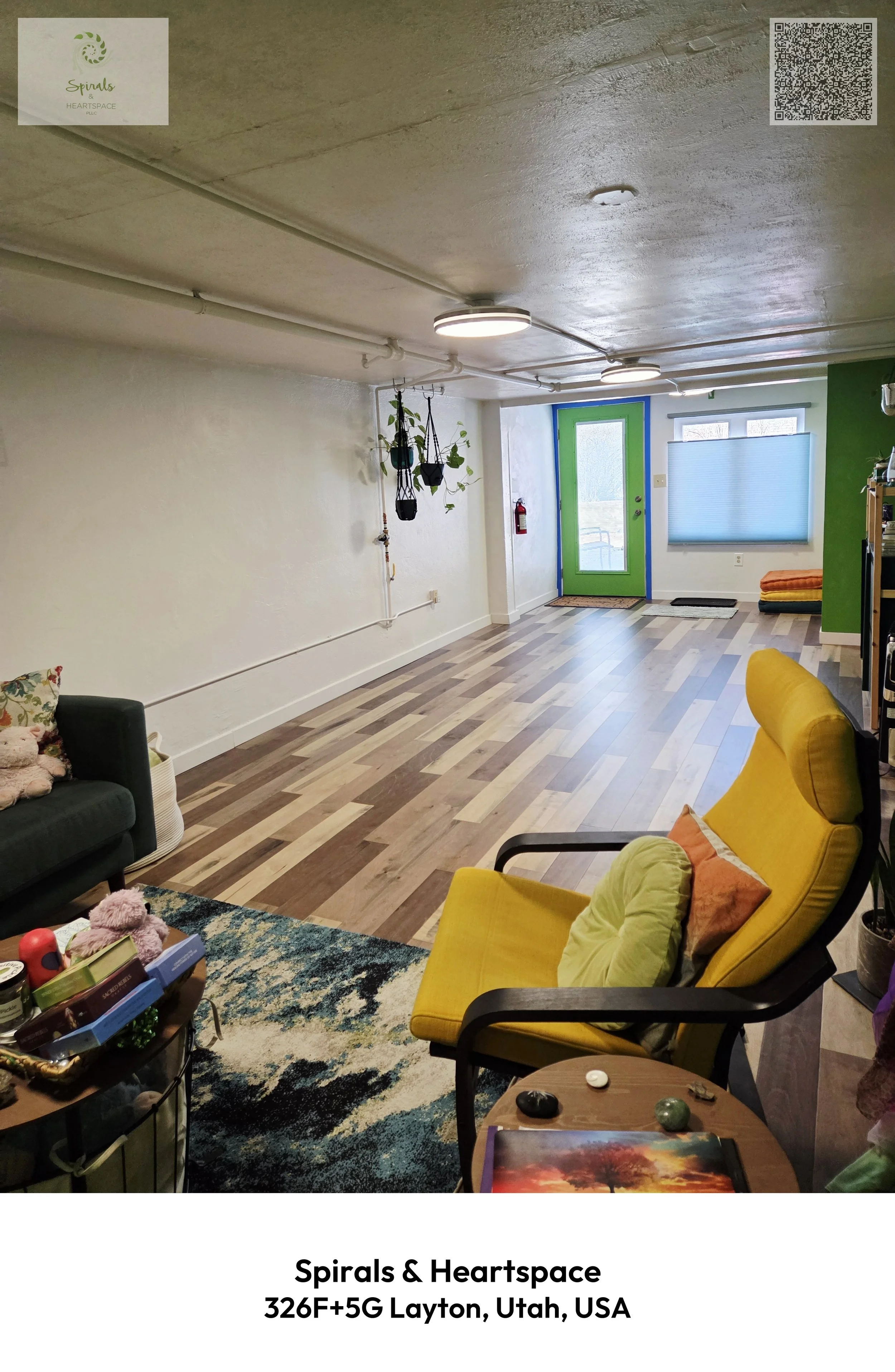
Spirals & Heartspace
Name: Spirals & HeartspaceAddress: 534 W Gentile St, Layton, UT 84041
Phone: (385) 301-5252
Website: https://spiralsandheartspacehealing.com/
Hours:
Sunday: Closed
Monday: 9:30 AM – 7:00 PM
Tuesday: 9:30 AM – 7:00 PM
Wednesday: 9:30 AM – 7:00 PM
Thursday: 9:30 AM – 7:00 PM
Friday: 9:30 AM – 7:00 PM
Saturday: Closed
Open-location code / plus code: 326F+5G Layton, Utah, USA
Coordinates: 41.0604503, -111.9762128
Map/listing URL: https://www.google.com/maps/place/Spirals+%26+Heartspace/@41.0604503,-111.9762128,766m/data=!3m2!1e3!4b1!4m6!3m5!1s0x875303311f1d4d1b:0xc6859e5e3fceafe2!8m2!3d41.0604503!4d-111.9762128!16s%2Fg%2F11x781dbvb
Embed iframe:
Socials:
Instagram: https://www.instagram.com/spiralsheartspace/
LinkedIn: https://www.linkedin.com/company/spirals-and-heartspace-pllc
TikTok: https://www.tiktok.com/@spiralsheartspace
X: https://x.com/SpiralsHea61786
YouTube: https://www.youtube.com/@SpiralsHeartspace
The practice is led by Ande Welling, a licensed clinical mental health counselor with training in dance/movement therapy, somatic work, EMDR, trauma care, relational neuroscience, and embodied attachment.
Listed services include therapy, coaching, consultation, authentic movement, trauma therapy, somatic therapy, grief counseling, movement therapy, and attachment therapy.
The practice serves adults who want a deeper body-aware approach to trauma, anxiety, depression, grief, burnout, self-abandonment, family patterns, and relationship wounds.
Spirals & Heartspace offers both in-person sessions in Layton and online therapy for clients in Utah.
The practice is locally positioned for clients in Layton, Kaysville, Farmington, Syracuse, Clearfield, Clinton, Roy, Ogden, Bountiful, Davis County, and nearby northern Utah communities.
The office is listed at 534 W Gentile St in Layton, with public listing hours Monday through Friday from 9:30 AM to 7:00 PM.
Prospective clients can call (385) 301-5252 or visit https://spiralsandheartspacehealing.com/ to ask about consultation options, session fit, and scheduling.
The public map listing for Spirals & Heartspace can help clients verify the Gentile Street office before planning an in-person appointment.
Popular Questions About Spirals & Heartspace
What is Spirals & Heartspace?
Spirals & Heartspace is a Layton, Utah psychotherapy and coaching practice offering somatic, trauma-focused, expressive arts, movement-based, and attachment-informed support for adults.
Who is the therapist at Spirals & Heartspace?
The official site identifies Ande Welling as the therapist, coach, movement facilitator, and guide behind Spirals & Heartspace. Listed credentials include LCMHC, BC-DMT, NCC, GL-CMA, BSE, EMDR Trained, and CCTP-II.
Where is Spirals & Heartspace located?
The matching public listing and LinkedIn profile list the address as 534 W Gentile St, Layton, UT 84041.
Does Spirals & Heartspace offer online therapy?
Yes. The official FAQ states that therapy is available in person or through a HIPAA-compliant telehealth platform for clients who live in Utah.
What services does Spirals & Heartspace provide?
Listed services include therapy, coaching, consultation, authentic movement, trauma therapy, somatic therapy, grief counseling, movement therapy, and attachment therapy.
What makes somatic therapy different from traditional talk therapy?
The official Layton page explains that somatic therapy works with body sensations, movement, and physical experience because trauma and emotional patterns can be held in the nervous system, not only in thoughts.
Do clients need dance experience for movement therapy?
No. The official Layton FAQ says no dance training or special physical ability is required, and that movement therapy uses a client’s natural capacity for movement to access emotions and process experiences.
Does Spirals & Heartspace accept insurance?
The official FAQ says the practice does not take insurance directly, but may provide superbills or bill for out-of-network benefits when applicable. Clients should confirm current reimbursement options directly before scheduling.
What are Spirals & Heartspace’s listed hours?
The matching public listing shows Monday through Friday from 9:30 AM to 7:00 PM, with Saturday and Sunday closed. Appointment availability should be confirmed directly.
How can I contact Spirals & Heartspace?
Call (385) 301-5252, visit https://spiralsandheartspacehealing.com/, or use the listed social profiles: https://www.instagram.com/spiralsheartspace/, https://www.linkedin.com/company/spirals-and-heartspace-pllc, https://www.tiktok.com/@spiralsheartspace, https://x.com/SpiralsHea61786, and https://www.youtube.com/@SpiralsHeartspace.
Landmarks Near Layton, UT
Spirals & Heartspace is located on West Gentile Street in Layton, Utah, with in-person therapy available locally and online therapy available for Utah residents. Clients near these landmarks can call (385) 301-5252 or visit https://spiralsandheartspacehealing.com/ to ask about somatic therapy, trauma therapy, movement therapy, grief counseling, attachment therapy, and consultation options.
- 534 W Gentile St — The listed office address for Spirals & Heartspace; clients can use the map listing to verify the office before visiting.
- West Gentile Street — The local street connected with the practice’s Layton office location.
- Downtown Layton — A practical local reference point for clients navigating central Layton.
- Layton Hills Mall — A major Layton shopping landmark and useful orientation point for clients traveling through the city.
- Interstate 15 near Layton — A major northern Utah route that helps clients reach Layton from nearby Davis County communities.
- Layton FrontRunner Station — A transit landmark for clients traveling by commuter rail through Davis County.
- Ellison Park — A local park and community landmark in Layton.
- Great Salt Lake Shorelands Preserve — A major natural landmark west of Layton and a recognizable Davis County destination.
- Hill Air Force Base — A major regional landmark near Layton and Clearfield.
- Kaysville — A nearby Davis County city listed in the practice’s surrounding service area.
- Farmington — A nearby Davis County community included in the broader local service-area language.
- Ogden — A nearby northern Utah city; clients can ask whether online Utah therapy or in-person Layton sessions are the best fit.