Intimacy is not just romance and warmth. It is also the moment your throat tightens when a partner turns away, the heat that rises in a conflict, the urge to pull back when closeness feels like pressure. Attachment therapy gives structure and language to those moments. It works at the level where experience is formed, often beneath words, then lifts it into shared meaning and deliberate choice. When it goes well, couples and individuals find they can stay a little longer in the room together, feel a little more, and protect what matters without shutting down.
Why attachment wounds show up where it matters most
Attachments form early. If care was consistent enough, we learned a basic rhythm of reaching and receiving, protesting and returning to calm. If care was frightening, inconsistent, intrusive, or absent, the nervous system built workarounds. Those workarounds are elegant, and they kept you going. In adult intimacy, they sometimes misfire.
One client, a software designer in her thirties, grew up with a parent who would withdraw for days after a disagreement. As a partner, she spoke carefully, always scanning for signs that emotions were rising. Her boyfriend kept saying he wanted more honesty. Each time she tried to be more direct, her chest seized, and she softened her words until they carried no weight. Without an understanding of attachment, this looked like avoidance. With attachment therapy, it was easy to see her body was protecting her from the threat of being left alone after a rupture.
Another client, a father of two in his fifties, reacted in seconds when his wife did not pick up the phone. He imagined the worst. In their history, he had good reasons. A caregiver had disappeared repeatedly during his childhood. His urgency was a protest. Once his wife understood this was not control but panic shaped by early separations, they could build a plan that met both his need for reassurance and her need for autonomy.
These patterns do not disappear with insight alone. They shift when bodies learn safety, when new repair experiences accumulate, and when both partners come to trust that conflict is survivable.
What actually happens in attachment therapy
Attachment therapy is less about excavating every memory and more about updating the nervous system with current reality. The therapist listens for https://lanesaix564.theglensecret.com/trauma-therapy-basics-a-beginner-s-guide cycles. Who reaches, who retreats, and what happens in the millisecond gap between a facial expression and a partner’s reaction. Sessions tend to slow things down. Two minutes on a single sentence. A pause to notice a breath that stops halfway. The goal is not to catch someone in a mistake, it is to notice the moment a protective move takes over and to ask what help that part of the person is asking for.
I often ask partners to speak from two places. First, the protector that learned to keep them safe. Second, the part that longs for contact. People are surprised by what comes out. The protector says, If I keep talking, I will make it worse, I should back away. The longing says, I want to know I matter enough that you will come find me. Once both voices are in the room, couples can shape new agreements. For example, the withdrawing partner might commit to a two-sentence signal before taking a break, and the pursuing partner might agree to pause the questions once the signal is given.
Attachment therapy draws on trauma therapy when there is a history of threat or neglect. It borrows the precision of somatic therapy to track how danger and relief move through the body. It honors the grief that often emerges when people notice what they did not get to have earlier in life, which is where grief counseling skills are essential. And it invites movement, sometimes playful, sometimes subtle, to teach the body it has choices. That is where movement therapy finds a place.
The body is the door, not a detour
Cognition helps us organize our stories, but the body executes attachment strategies before a thought arrives. You can watch it in micro-expressions, in the way someone’s eyes scan, in a hand that starts to clench when a partner leans forward. Somatic therapy provides tools to work at that speed. A simple exercise is the micro-approach. One partner moves their chair two inches closer, then pauses to track what shifts. Shoulders rise. Breath grows shallow. A wave of heat moves through the chest, often cresting within about 60 to 90 seconds if no new threat is added. Then the partner asks, At this distance, what is happening? The focus is on noticing, not fixing. Small doses allow the nervous system to complete stress cycles that were previously interrupted.
Anchoring safety also matters. Many people can tolerate more sensation when they feel the edge of a chair under their thighs, the floor under their feet, or the weight of their hands on their own ribs. Touch can be a resource or a trigger. Attachment therapy pays attention to this. A therapist might invite a partner to place a palm on their own sternum as they speak, or to lean back into a sofa rather than forward into a conflict stance. These micro-adjustments communicate enough safety to keep the conversation going.
When trauma is in the mix
Not every difficult attachment pattern involves trauma, but many do. Trauma therapy principles become vital when the body’s reactions are extreme, when dissociation shows up, or when someone’s window of tolerance is very narrow. The work then proceeds in titrated steps. We establish present safety first, sometimes with a short, scripted exchange that partners can repeat when things heat up. We avoid flooding. We name choice points. I might say, I see your eyes glazing, which used to be a brilliant response to overwhelm. Would it be okay to pause and come back to the room together?
People expect progress to be linear. It is not. A couple can have a breakthrough on Saturday and feel like strangers again on Tuesday. That is not failure. The nervous system needs repetition and variety. It learns best when small successes are followed by rest.

If there is a history of domestic violence, stalking, coercive control, or ongoing betrayal, the priorities change. Safety and stabilization come first. Individual therapy may be necessary before or alongside couples work. It is not always safe to deepen intimacy with the very person associated with threat. A skillful therapist names that directly and helps design a plan that protects the client’s body and dignity.
Repair is the engine of intimacy
People often imagine that secure relationships are marked by perfect attunement. In real partnerships, misattunements happen daily. The difference is repair. Attachment therapy pays attention to the speed, sincerity, and shape of repairs. We practice three moves: name impact, own your contribution without caveats, and check what would help next time. A clean repair sounds like, When I looked at my phone while you were talking, you felt unimportant. I did that, and I get how it landed. Next time I will put my phone face down or ask for two minutes to finish something. Is that what you need?
Timing matters. Some repairs are immediate. Others need an hour of cooling. For couples with different needs here, we co-create a repair window that both can trust. For example, By 7 p.m. Tonight we will circle back for 10 minutes. The container reduces the anxiety that often fuels pursuing or withdrawing.
Boundaries are not barriers to intimacy. They are the frame that holds it. People raised in unpredictable environments sometimes feel guilty when they set limits. In therapy, we practice saying no in ways that still invite connection. I like being close, and I need to finish this paragraph before I can give you full attention. The and keeps the bridge intact.
The role of movement and rhythm
Movement therapy takes the insights of attachment work and teaches the body new dances. Some couples thrive with small, silly rituals. One pair I worked with created a 20 second end of day check in that included three movements: a shoulder shrug to release the day, a synchronized breath with hands on ribs, and a quick hip sway to reset. They laughed at first. Two weeks later they noticed fewer sharp edges before dinner.
Walking conversations can defuse intensity because people are side by side rather than face to face. This matters for partners who feel overwhelmed by eye contact during conflict. Pacing a hallway or taking a slow loop outside changes the input to the nervous system and can increase access to language. Short bursts, five to ten minutes, are usually enough.
On the other end of the spectrum, stillness can be powerful. Sitting back to back for two minutes, noticing heat and pressure where spines meet, can give a felt sense of support without the demands of eye contact. Attachment therapy is pragmatic. It uses what your body already understands.
Grief is often beneath the anger
Grief counseling belongs inside attachment work. People grieve not only deaths, but the touch they did not receive, the apologies that never came, the time lost to hypervigilance. When partners make room for this layer, blame drops. A woman who could never relax if the dishes were left undone discovered that, as a child, chaos preceded a parent’s rage. Her tidy habits were not about control, they were protective. When her husband could meet her grief at having been a watchful child, they designed a plan for evenings that eased both of them. On nights when the sink had to wait, they named it out loud and made eye contact for five seconds before sitting down together. The ritual acknowledged what was hard and what they were choosing.
Grief moves in waves. It resists schedules. For individuals, it can help to have a private ritual, a chair by a window, a weekly walk, a song that becomes a container. For couples, a small phrase can soften the field. This is one of those old hurts. Let’s go slow. The point is not to process everything at once. It is to allow the body to trust that tears and tenderness will be met with care.
Working with couples, pacing matters
In couples sessions, I track for three things: speed, sequence, and saturation. Speed is how fast someone’s arousal climbs. Sequence is the order in which protective moves appear. Saturation is the point at which no new information can land. When saturation arrives, I stop the content and shift to regulation. That might mean eyes on a neutral object, a sip of water, or a five breath count together. Some partners protest that this interrupts the flow. It does. It also keeps the conversation within range where new learning is possible.
Microscripts can be useful training wheels. These are brief phrases that hold the shape of a repair or request. Over time they fall away as people internalize the rhythm. Early on, they prevent spirals. A few examples I have seen help: I want to stay with you, and my chest is too tight to think. I need 15 minutes, then I will come back. Or, I am hearing your words, and my stomach is braced. Can we slow three notches?
Culture, context, and consent
Attachment therapy is not value neutral. Culture shapes how closeness is expressed, which emotions feel safe, and what a good apology sounds like. A nod can be more sincere than a hug for some families. Silence can be respect, not withdrawal. Good therapy asks which meanings live in the room before assigning labels like avoidant or anxious.
Consent is also central. No exercise, touch, or experiment is required. People with a trauma history need clear permission to say no without penalty. The same goes for humor. Some couples repair through banter. Others experience humor as minimization. We test, we ask, we adapt.
Practical starting places at home
- A two minute daily check in. Sit or stand facing each other. Take one breath together. Each person shares one sensation in the body, one emotion, and one specific appreciation. No fixing, no questions. A time limited conflict container. When a disagreement starts, set a 12 minute timer. Speak in three minute turns, plus one minute of silence between turns to notice breath and body. If the timer dings and you are not done, schedule a second round for the next day. A repair ritual. When you notice a misstep, name impact in one sentence, own your part in one sentence, propose a next time adjustment in one sentence. Then ask, Does that help? If not, ask what would. A movement reset. Choose one of the following and do it together when tension rises: 30 seconds of wall push, 10 slow shoulder circles, or a short walk down the block without talking. A boundary phrase. Agree on language that signals a pause while affirming connection, such as, I am at capacity, and I am coming back at 8 p.m.
These are small, repeatable, and easy to recover if you miss a day. Consistency beats intensity.
How progress looks and feels
- You notice your body earlier. Instead of realizing you were triggered after the fight, you feel the jaw tighten in the first minute. You repair faster. A rupture that used to last three days now resolves by bedtime, or at least has a plan. You argue about the thing at hand, not last year’s archive. The content narrows, and you stay closer to the present. You can stay separate without going distant. One person reads, the other cooks, and neither feels abandoned. You can savor. Moments of ease stretch longer. This is not sentimental, it is nervous system learning.
Progress is rarely loud. It is the quiet arrival of new options.
Common pitfalls and how to avoid them
Some couples weaponize the language of attachment. Anxious and avoidant become new insults. If you hear yourselves doing this, retire the labels for a season. Describe behaviors instead. I raise my voice and follow you to the hallway. I shut down and pretend to agree. Concrete behaviors are easier to change than identities.
Another trap is believing that one person must heal first. Waiting for private perfection before reentering connection is a long wait. Individual work helps, especially when unprocessed trauma or grief is present, but much healing occurs inside the relationship. The key is to pace demands with capacity.
People also expect breakthroughs to erase old reactions. They do not. You may still get the urge to bolt or to push. The shift is that you know what is happening, you can say so sooner, and your partner has practiced how to meet you there.
A quieter pitfall is overusing tools. Scripts and timers can stiffen a relationship if they dominate. Use them as ramps, not destinations. The point is to feel more like yourselves with each other, not to sound like a textbook.
When more support is needed
If panic attacks occur during conflict, if dissociation pulls you out of the room, if there is active substance abuse, or if there are safety concerns, add professional help. Look for someone trained in attachment therapy who is also comfortable with trauma therapy and somatic therapy. Ask about their approach to pacing, consent, and cultural humility. If grief is flooding the relationship after a loss, bring in grief counseling. If one or both bodies carry a backlog of stress that does not discharge through talk alone, weave in movement therapy. Sometimes a short burst of intensive support, three to six months, creates enough traction that the couple’s own rituals can take over.
Integrating modalities without getting lost
An integrated plan is more effective than a scattered one. A reasonable arc might look like this. In early weeks, focus on stabilizing routines and agreement about how to pause and repair. Add somatic anchors so both bodies can stay present longer. As capacity grows, invite deeper attachment narratives into the room, not to dwell, but to understand the origin of present moves. When grief emerges, give it room. If it feels too big, carve space for individual grief counseling while the couple maintains lighter connection rituals. Periodically refresh movement practices so they stay alive rather than rote.
The sequence can vary. What matters is that each piece supports the others. A 10 percent change in daily rhythm, applied consistently, often outperforms a weekend of heroic processing.
What I watch for in the room
Experience has taught me a few markers that reliably predict momentum. When partners start noticing their own bodies before I prompt them. When someone interrupts a familiar spiral with a self observation spoken out loud, My throat just closed, I need a sip of water. When laughter returns without mockery. When apologies shrink from paragraphs to clean lines. When a partner can ask for solitude without layering on shame, and the other can say yes without resentment. These are the moments I underline.
I also watch for the edges. If one person is complying to keep the peace, I slow down. If a history of betrayal is being minimized in the name of moving on, I stop the forward march. If the work is stirring up old memories that leave someone wrung out for days, I adjust the dose. Therapy is a lab, not a test.
A closing reflection
Secure intimacy is not the absence of need. It is the ability to name needs in ways that invite meeting, and to tolerate the reality that sometimes needs will be unmet without love disappearing. Attachment therapy creates a map for how to do that. It respects the body, brings grief into the light, and uses movement and ritual to knit insight into daily life. Over time, partners begin to trust that they can find each other again after the inevitable separations of ordinary days. That trust is not romantic fluff. It is a practical resource that steadies work, parenting, aging, and loss. It lets people take more risks in the world because home feels like a place where repairs are possible.
The path is not quick, but it is learnable. With consistent attention, a little courage, and the humility to practice small things often, safe connection deepens. Even long standing patterns soften. You will still have arguments, and sometimes you will still miss each other. What changes is what happens next. You will know how to come back. You will have built, between you, a relationship that can hold both tenderness and truth.
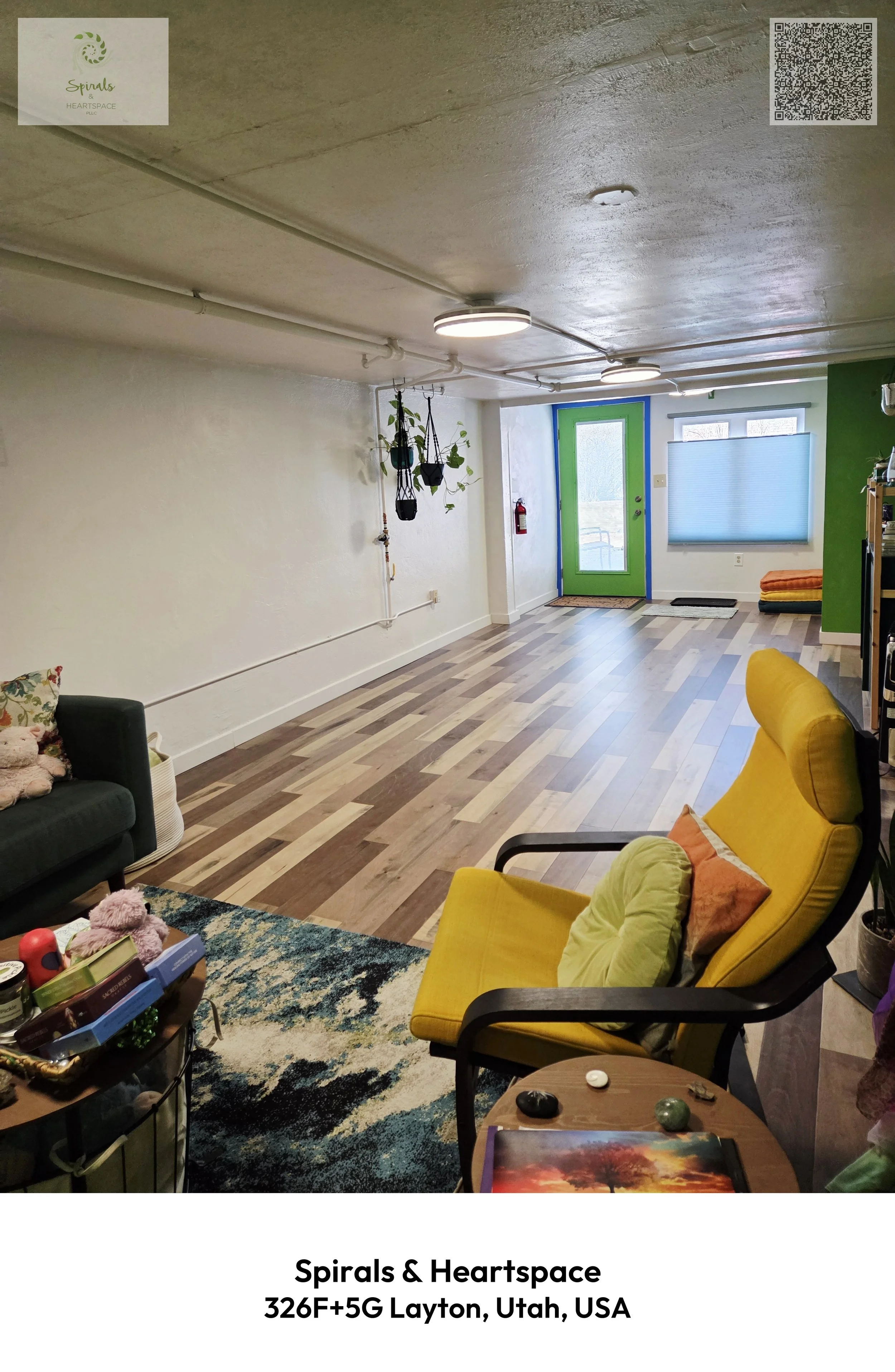
Spirals & Heartspace
Name: Spirals & HeartspaceAddress: 534 W Gentile St, Layton, UT 84041
Phone: (385) 301-5252
Website: https://spiralsandheartspacehealing.com/
Hours:
Sunday: Closed
Monday: 9:30 AM – 7:00 PM
Tuesday: 9:30 AM – 7:00 PM
Wednesday: 9:30 AM – 7:00 PM
Thursday: 9:30 AM – 7:00 PM
Friday: 9:30 AM – 7:00 PM
Saturday: Closed
Open-location code / plus code: 326F+5G Layton, Utah, USA
Coordinates: 41.0604503, -111.9762128
Map/listing URL: https://www.google.com/maps/place/Spirals+%26+Heartspace/@41.0604503,-111.9762128,766m/data=!3m2!1e3!4b1!4m6!3m5!1s0x875303311f1d4d1b:0xc6859e5e3fceafe2!8m2!3d41.0604503!4d-111.9762128!16s%2Fg%2F11x781dbvb
Embed iframe:
Socials:
Instagram: https://www.instagram.com/spiralsheartspace/
LinkedIn: https://www.linkedin.com/company/spirals-and-heartspace-pllc
TikTok: https://www.tiktok.com/@spiralsheartspace
X: https://x.com/SpiralsHea61786
YouTube: https://www.youtube.com/@SpiralsHeartspace
The practice is led by Ande Welling, a licensed clinical mental health counselor with training in dance/movement therapy, somatic work, EMDR, trauma care, relational neuroscience, and embodied attachment.
Listed services include therapy, coaching, consultation, authentic movement, trauma therapy, somatic therapy, grief counseling, movement therapy, and attachment therapy.
The practice serves adults who want a deeper body-aware approach to trauma, anxiety, depression, grief, burnout, self-abandonment, family patterns, and relationship wounds.
Spirals & Heartspace offers both in-person sessions in Layton and online therapy for clients in Utah.
The practice is locally positioned for clients in Layton, Kaysville, Farmington, Syracuse, Clearfield, Clinton, Roy, Ogden, Bountiful, Davis County, and nearby northern Utah communities.
The office is listed at 534 W Gentile St in Layton, with public listing hours Monday through Friday from 9:30 AM to 7:00 PM.
Prospective clients can call (385) 301-5252 or visit https://spiralsandheartspacehealing.com/ to ask about consultation options, session fit, and scheduling.
The public map listing for Spirals & Heartspace can help clients verify the Gentile Street office before planning an in-person appointment.
Popular Questions About Spirals & Heartspace
What is Spirals & Heartspace?
Spirals & Heartspace is a Layton, Utah psychotherapy and coaching practice offering somatic, trauma-focused, expressive arts, movement-based, and attachment-informed support for adults.
Who is the therapist at Spirals & Heartspace?
The official site identifies Ande Welling as the therapist, coach, movement facilitator, and guide behind Spirals & Heartspace. Listed credentials include LCMHC, BC-DMT, NCC, GL-CMA, BSE, EMDR Trained, and CCTP-II.
Where is Spirals & Heartspace located?
The matching public listing and LinkedIn profile list the address as 534 W Gentile St, Layton, UT 84041.
Does Spirals & Heartspace offer online therapy?
Yes. The official FAQ states that therapy is available in person or through a HIPAA-compliant telehealth platform for clients who live in Utah.
What services does Spirals & Heartspace provide?
Listed services include therapy, coaching, consultation, authentic movement, trauma therapy, somatic therapy, grief counseling, movement therapy, and attachment therapy.
What makes somatic therapy different from traditional talk therapy?
The official Layton page explains that somatic therapy works with body sensations, movement, and physical experience because trauma and emotional patterns can be held in the nervous system, not only in thoughts.
Do clients need dance experience for movement therapy?
No. The official Layton FAQ says no dance training or special physical ability is required, and that movement therapy uses a client’s natural capacity for movement to access emotions and process experiences.
Does Spirals & Heartspace accept insurance?
The official FAQ says the practice does not take insurance directly, but may provide superbills or bill for out-of-network benefits when applicable. Clients should confirm current reimbursement options directly before scheduling.
What are Spirals & Heartspace’s listed hours?
The matching public listing shows Monday through Friday from 9:30 AM to 7:00 PM, with Saturday and Sunday closed. Appointment availability should be confirmed directly.
How can I contact Spirals & Heartspace?
Call (385) 301-5252, visit https://spiralsandheartspacehealing.com/, or use the listed social profiles: https://www.instagram.com/spiralsheartspace/, https://www.linkedin.com/company/spirals-and-heartspace-pllc, https://www.tiktok.com/@spiralsheartspace, https://x.com/SpiralsHea61786, and https://www.youtube.com/@SpiralsHeartspace.
Landmarks Near Layton, UT
Spirals & Heartspace is located on West Gentile Street in Layton, Utah, with in-person therapy available locally and online therapy available for Utah residents. Clients near these landmarks can call (385) 301-5252 or visit https://spiralsandheartspacehealing.com/ to ask about somatic therapy, trauma therapy, movement therapy, grief counseling, attachment therapy, and consultation options.
- 534 W Gentile St — The listed office address for Spirals & Heartspace; clients can use the map listing to verify the office before visiting.
- West Gentile Street — The local street connected with the practice’s Layton office location.
- Downtown Layton — A practical local reference point for clients navigating central Layton.
- Layton Hills Mall — A major Layton shopping landmark and useful orientation point for clients traveling through the city.
- Interstate 15 near Layton — A major northern Utah route that helps clients reach Layton from nearby Davis County communities.
- Layton FrontRunner Station — A transit landmark for clients traveling by commuter rail through Davis County.
- Ellison Park — A local park and community landmark in Layton.
- Great Salt Lake Shorelands Preserve — A major natural landmark west of Layton and a recognizable Davis County destination.
- Hill Air Force Base — A major regional landmark near Layton and Clearfield.
- Kaysville — A nearby Davis County city listed in the practice’s surrounding service area.
- Farmington — A nearby Davis County community included in the broader local service-area language.
- Ogden — A nearby northern Utah city; clients can ask whether online Utah therapy or in-person Layton sessions are the best fit.